Monthly Archives: June 2012

Making Art and Development

(Entry for the Guardian International Development Journalism Competition)

Creativity Could be the Greatest Influence for Change in the Developing World

‘My opinion is important, if something bad was to happen I can use it to make things better’ (Ibrahimu 9yrs Making Art, Making Me, Moshi Rural, Tanzania, 2012)

Ibrahimu is one of 60 children currently participating in a creative learning project, Making Art, Making Me, supported by Childreach International in Tanzania. In the project children are practically and creatively learning about identity, whilst building life skills and confidence.  What Ibrihimu doesn’t realise yet, is that his generation’s opinions and ability to make things better are crucial if Tanzania is to achieve the MDG targets by 2015, and become active participants in the global developments of the twenty-first century, outlined in its 2025 development vision.

Nelson Mandela once said that education is the most powerful tool for change in the developing world and thus, universal primary education is high up on the international agenda for development. The East African community is proud to be on target for achieving this and at the turn of the 21st century, Kenya, Uganda and Tanzania all pulled the plug on fees and declared ‘free’ primary education for all of those who can afford the annual contributions. In Tanzania, parents can expect to pay the equivalent of nearly £60 a year, which is a substantial amount for those living below the poverty line. This money could feed a rural family of five for up to six months.

After primary education became free in 2001 schools were inundated with children and Tanzanian net enrolment rates soared from 80.7% in 2002 to an impressive 97.7% by 2008 (TZ MDG Progress Report). This looks remarkable on paper, but the reality is that this is purely a statistic, an impressive figure that shows that there is the desire to learn in Tanzania. The net enrolment rate tells us nothing about the quality of education: how are we to know whether these children are being equipped with the knowledge and skills necessary to meet the development challenges of the future?  A worrying report published by Uwezo finds very evident discrepancies between the number of children enrolled in school and those who leave without basic competencies in numeracy and literacy. Tanzania had some of the worst results in east Africa, where a disturbing 32% of children in the last year of primary school at Standard 7 (14-15yrs), failed to perform simple numeracy tasks expected at Standard 2 (7-8yrs).  This trend was also seen in Kiswahili and English results, which begs the question, why aren’t these children learning?

Tanzania’s Development Vision (2025) recognises the need for reform. It calls for the education system to be restructured and transformed qualitatively. It also promotes creativity and problem solving as necessary classroom skills for development. Things are changing, but pole pole (slowly slowly) as the Tanzanians say, with the last curriculum alteration in 2011. However, these changes are made at Ministerial level and often neglect fundamental practicalities such as, how can teachers effectively teach the new communication curriculum without electricity and computers?  As a result new subjects are taught theoretically.

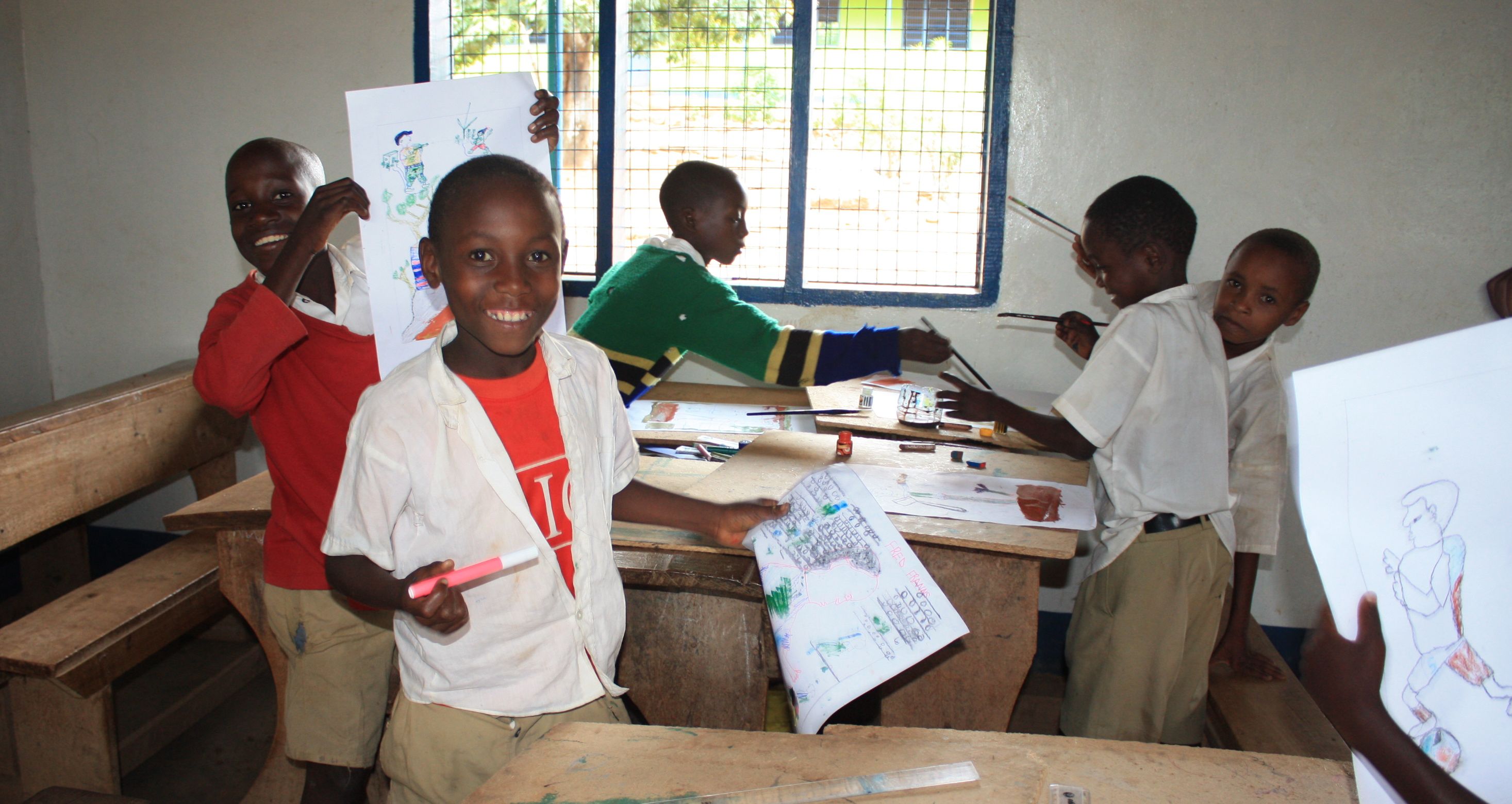
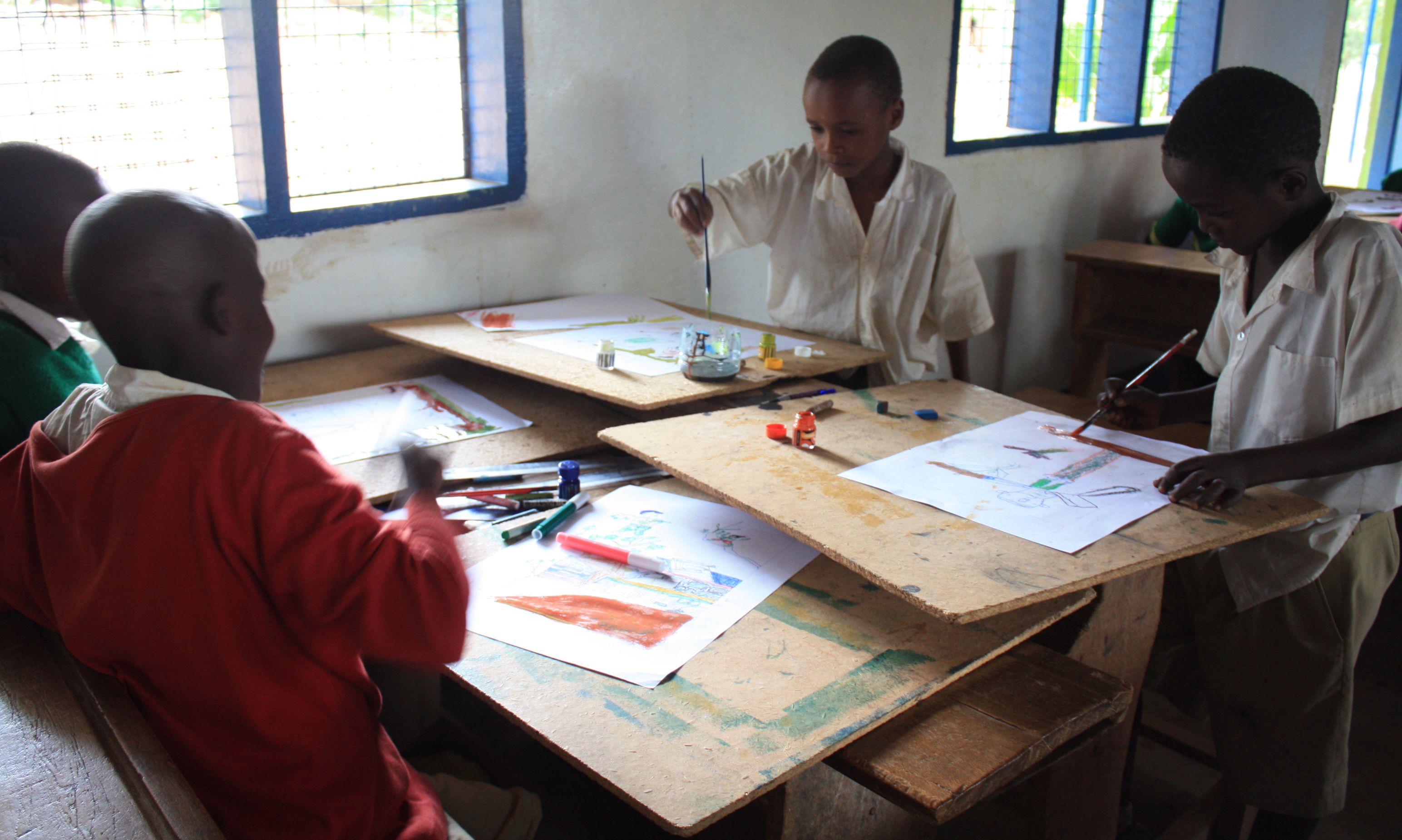
These curriculum changes are not enough to address the immediate damage done to the current key stakeholders of education, Tanzania’s children and future generations. Childreach International is currently tackling this problem hands on in the Kilimanjaro region of Tanzania and on the 4th of May they will be exhibiting a diverse array of art work produced during the innovative project ‘Making Art, Making Me’ in Moshi, Tanzania. Here children have been participating in weekly creative workshops in which they have built and shared ideas about their personal, local and global identity. Using a non-formal approach they will demonstrate to the District Education Officers and local teachers how problem solving and creativity can be resourcefully integrated into the curriculum. The project has aimed to develop key life skills, whilst building self-confidence.  It has also aimed to assist students with gaining a critical understanding of their identity through arts, drama and collaborative work.  The work shown will demonstrate how this approach can have an immediate and lasting impact on children, many of whom had previously struggled to present in front of a class and failed to see how they could communicate problems through the arts. These children have since been able to articulately explain their work which ranges from identifying important elements of a community, such as working together, environmental protection and support networks. Another group of girls from a school in rural Moshi have produced prints which identify their child rights and responsibilities. Here the artwork made calls upon children to refuse work for low wages (100Tsh/ 4pence to pick 1 kilo of coffee over many hours) on a multinational ‘fair-trade’ coffee company, and encourages the community to educate parents and children alike about their rights.

If education really is the greatest tool for change in the developing world and is to encourage a positive influence on social, political and cultural practice, then education must include social, political and cultural thinking.  In just three months Making Art, Making Me has demonstrated how a little innovation and creativity can go a long way. Using art, drama and communication (a fundamental principle) they have stimulated critical, enquiry based learning in children which have spanned all of the above topics. When presenting a collage  to the class, which identified important factors in a community, the group of four girls pointed out a photograph of children cramped in a class room, many sat on the floor.  They went on to explain that the government needs to invest more money in schools as communities can only grow and support each other with proper education. It is clear that these class discussions and group work has developed crucial skills and knowledge enabling them to articulate their needs and identify their solutions.

If after just three months these children are able to stand up and question multinational organisations and call upon their government for change on education policy, imagine what could be achieved if Tanzania really does reform its education system qualitatively?  With all this in mind, creative education really could be the greatest influence for change in the developing world and help to equip Tanzania to eradicate extreme poverty, hunger and solve future development challenges.
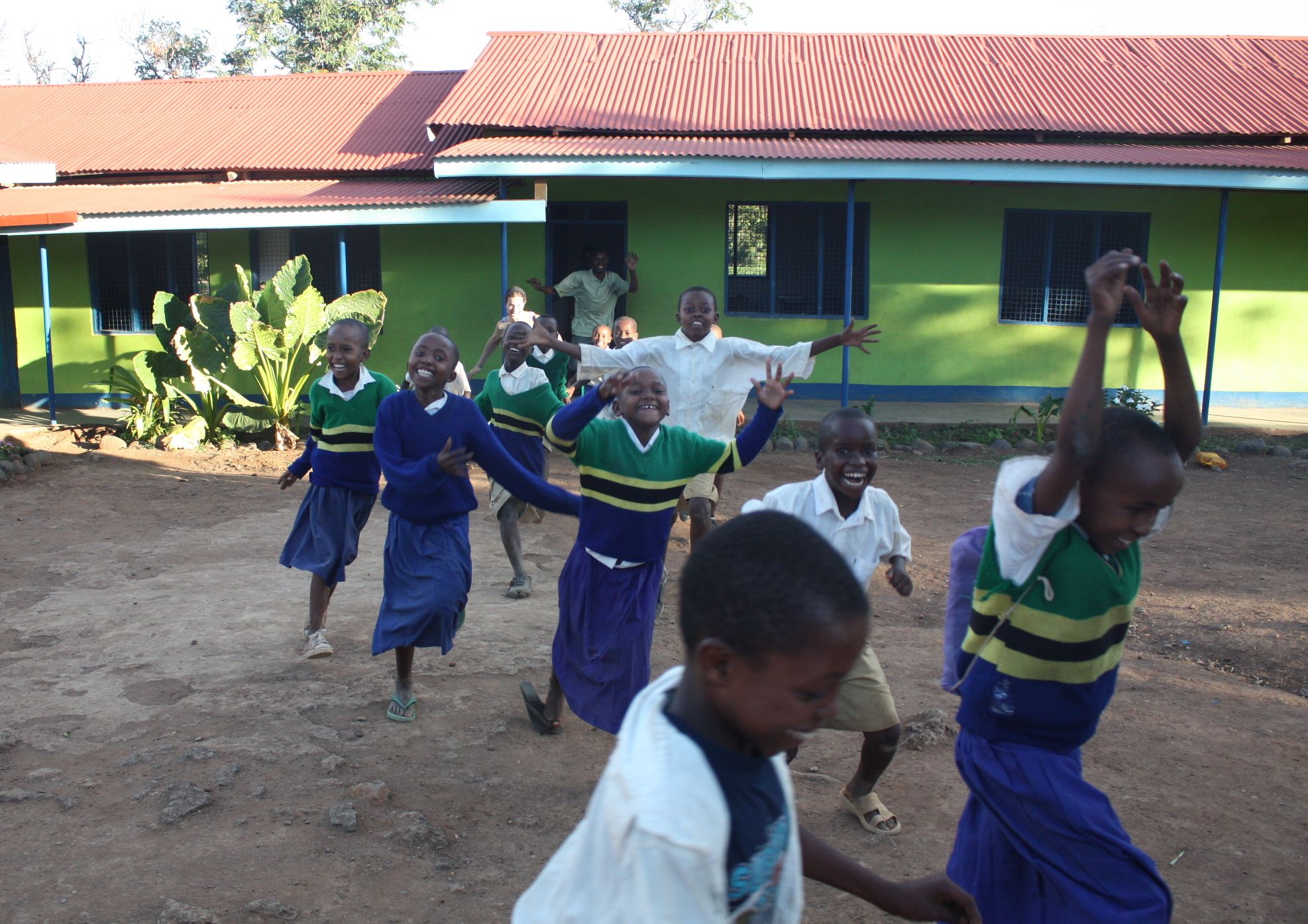
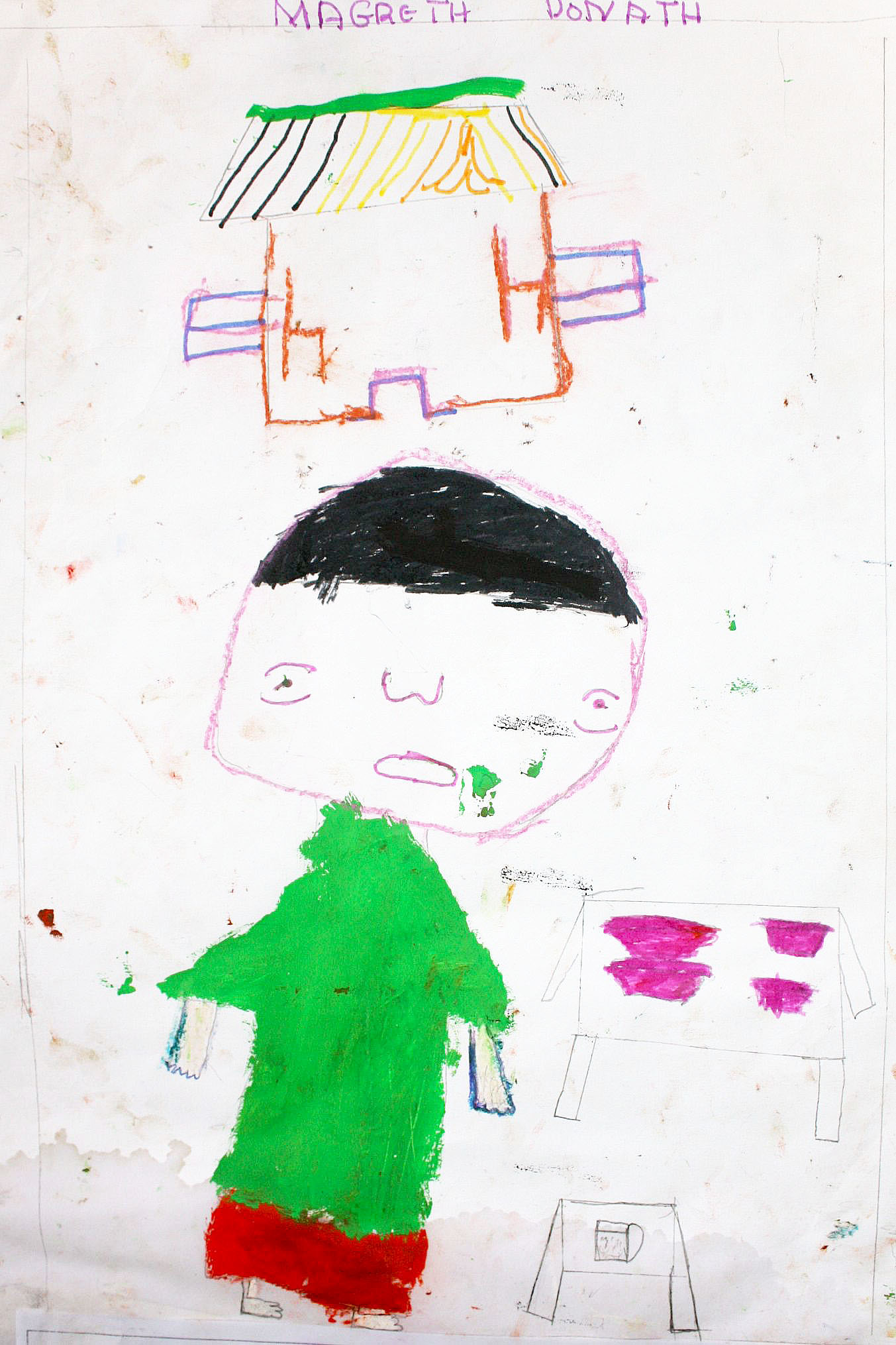
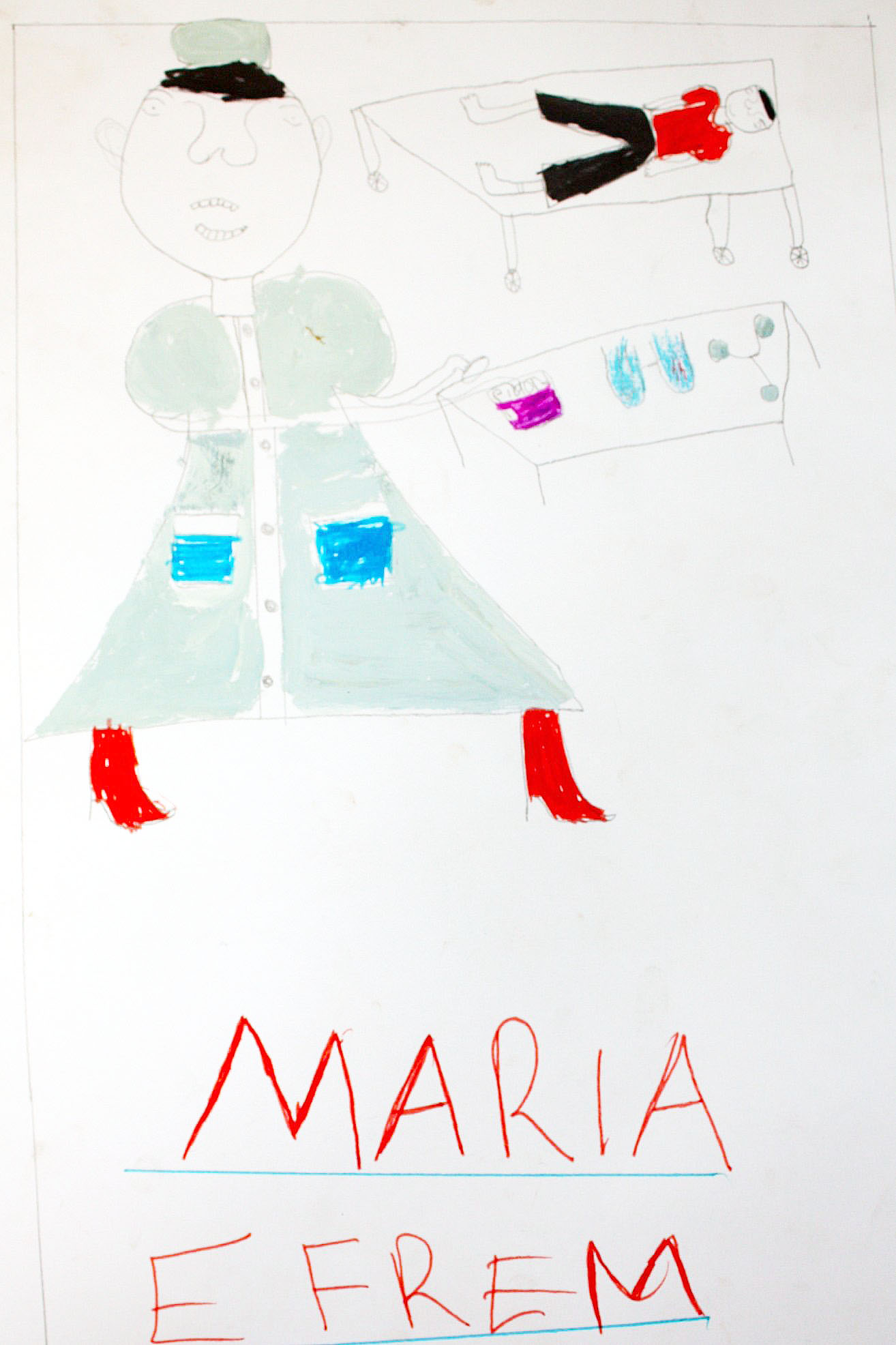
Photograph taken from the evaluation activity – How does Making Art, Making Me make you feel?
Leave a comment

Filed under Tanzanian Developent Vision 2025, The Millenium Development Goals (MDG)

Looking to the Future

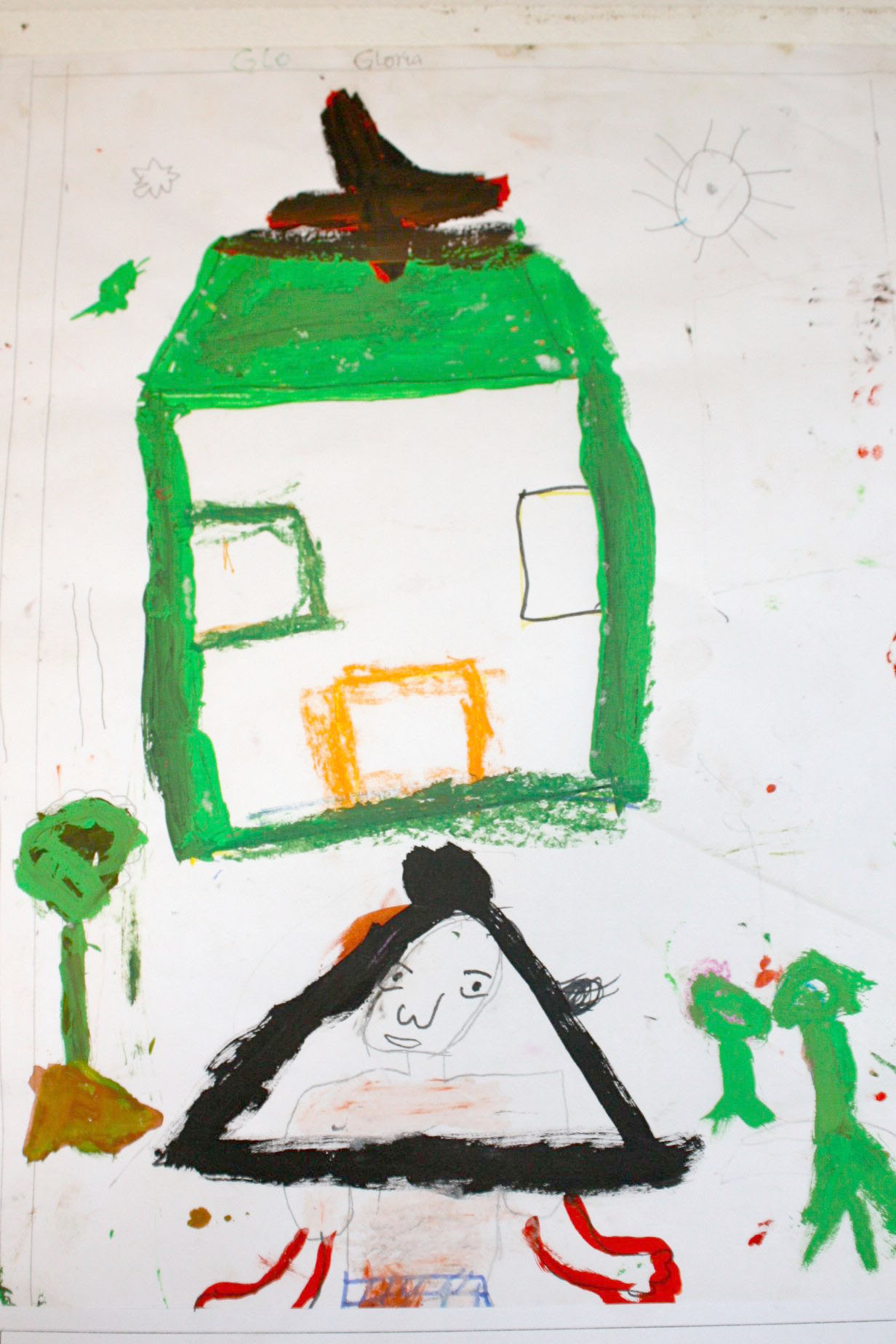
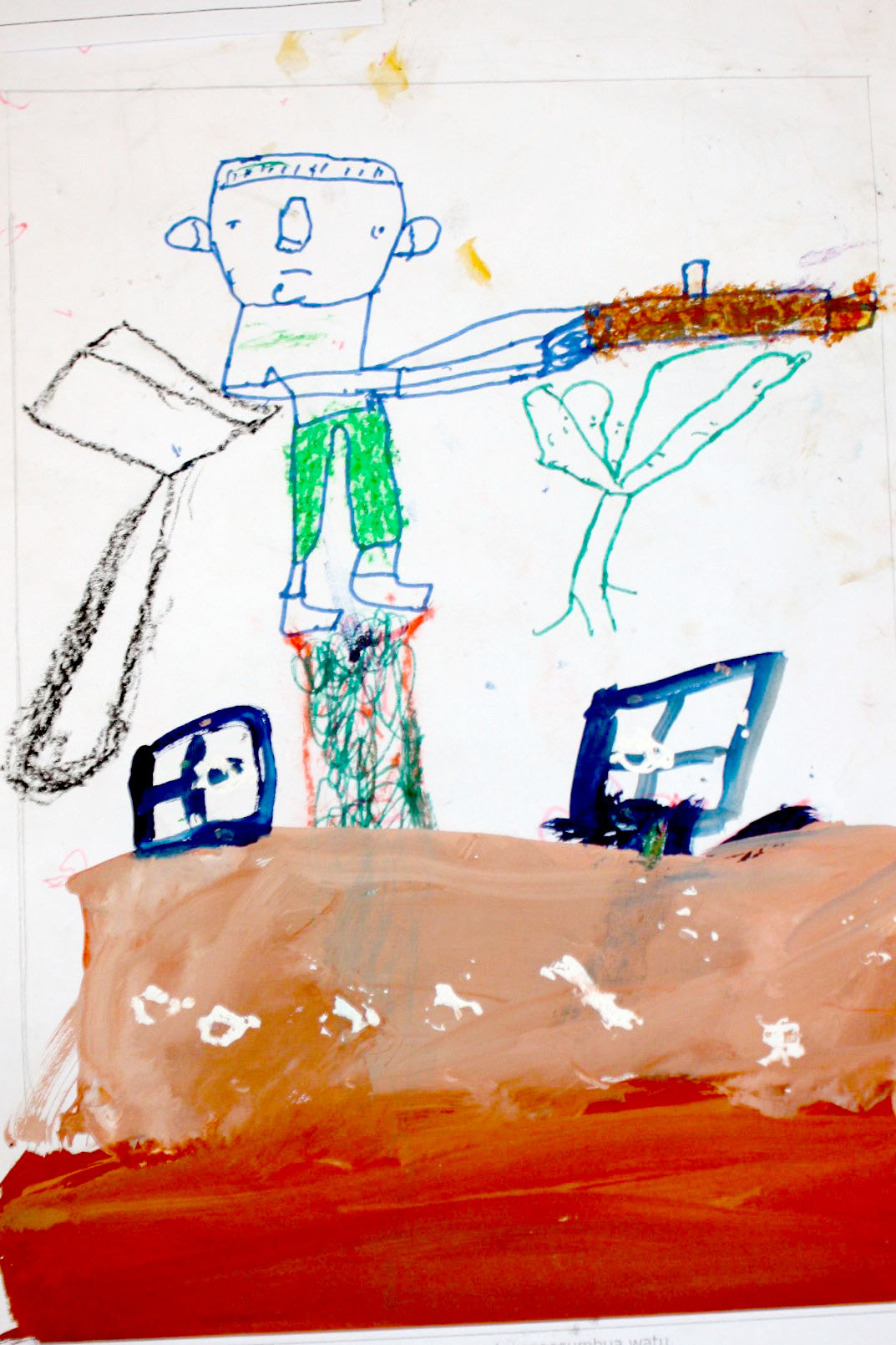
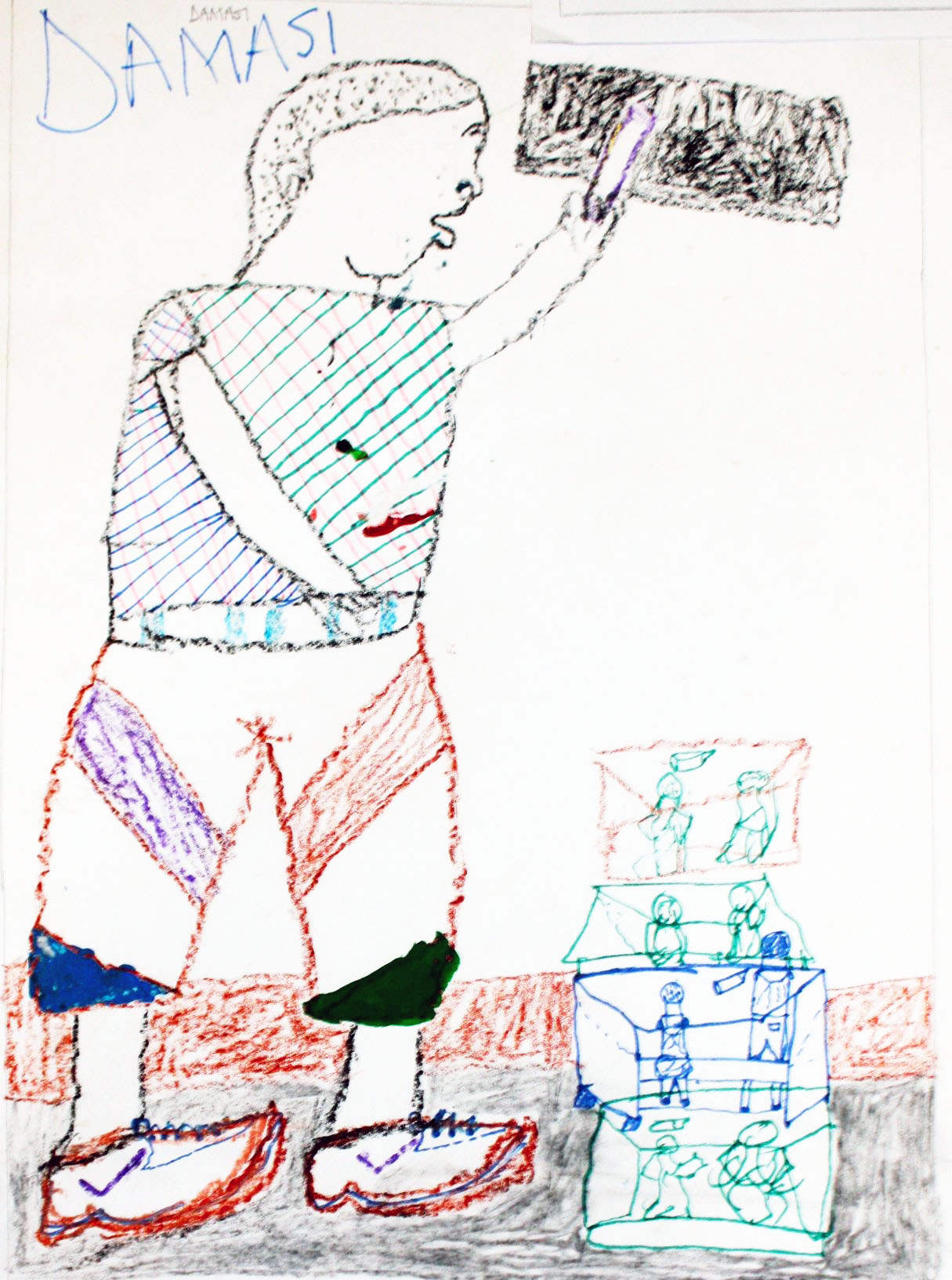
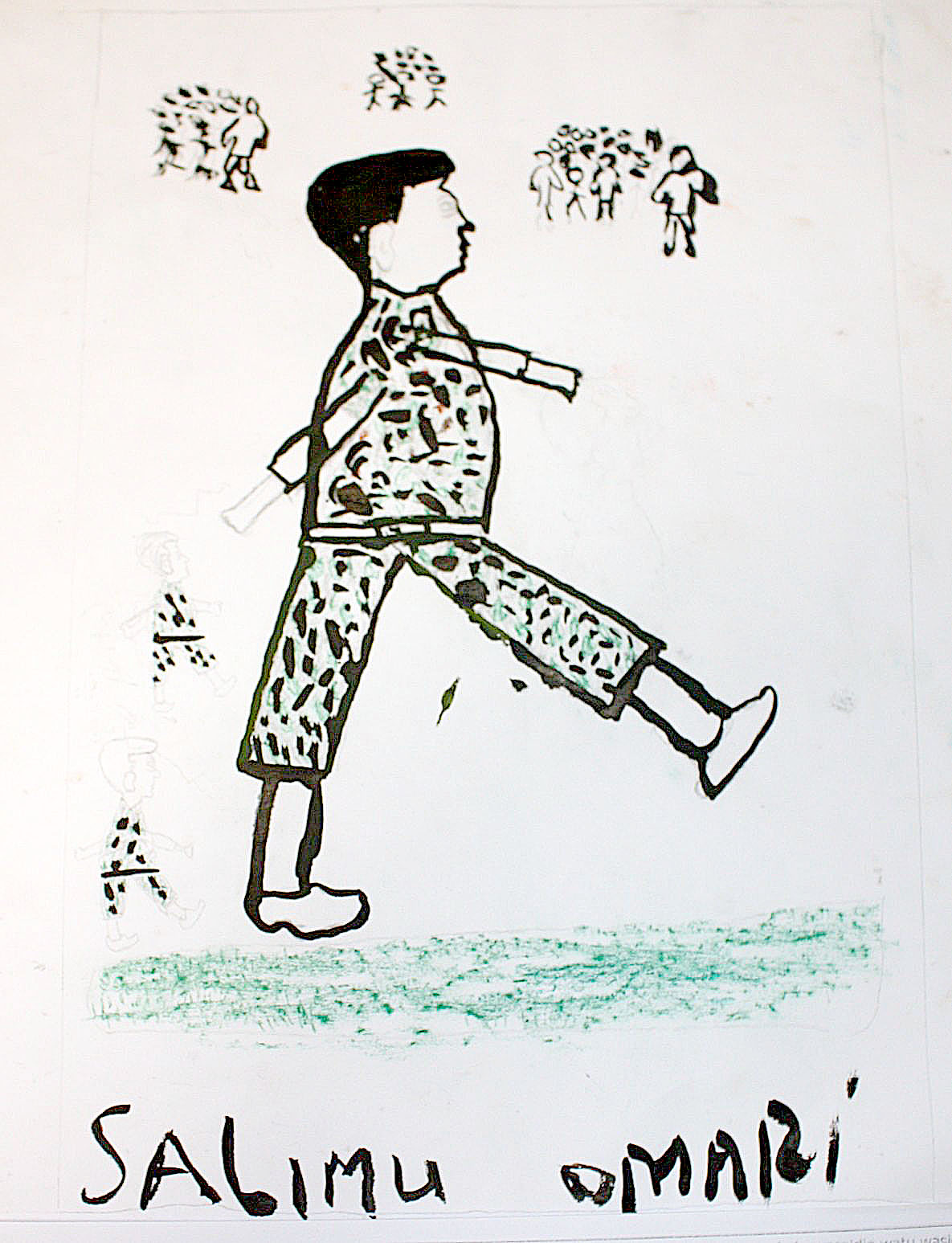
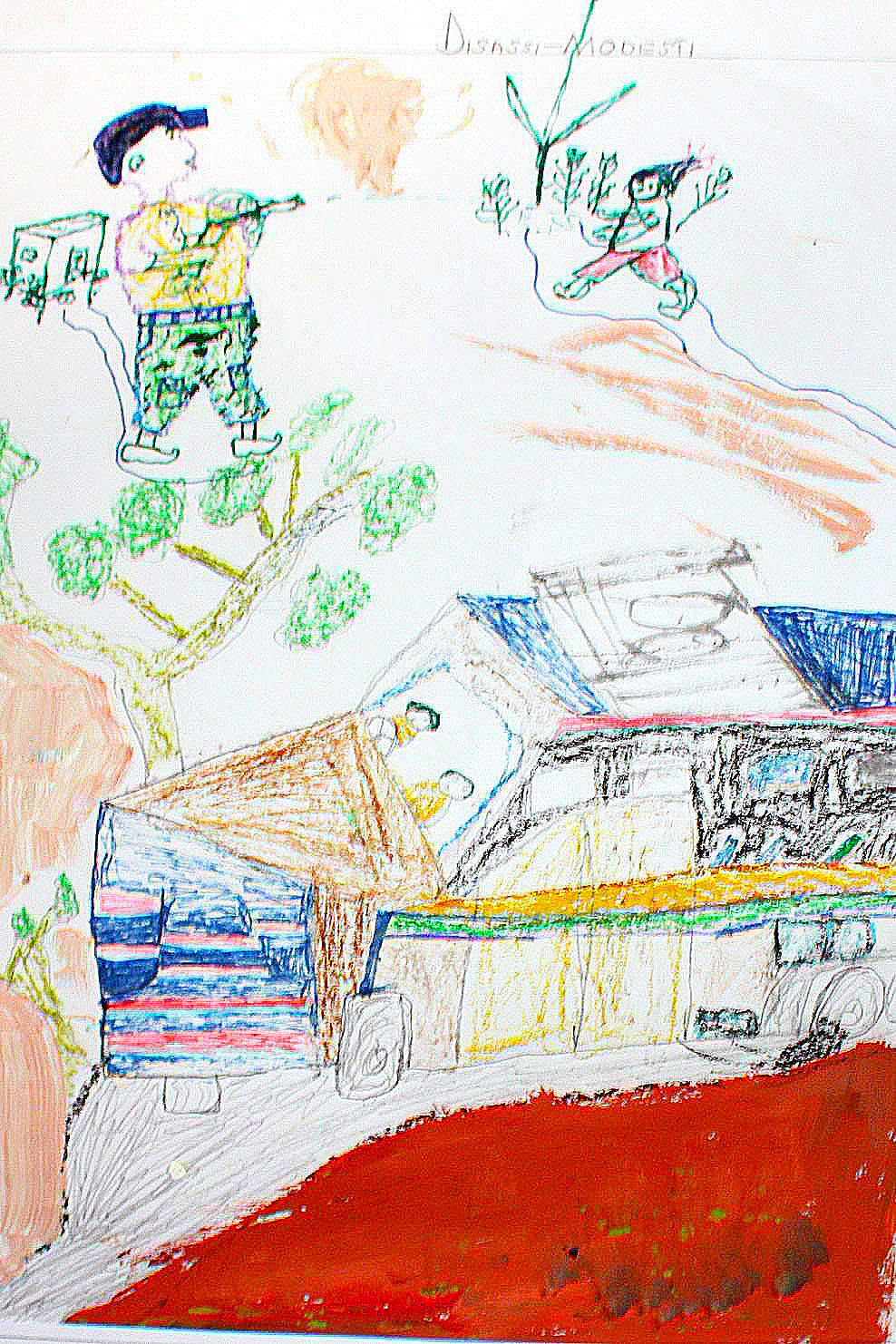
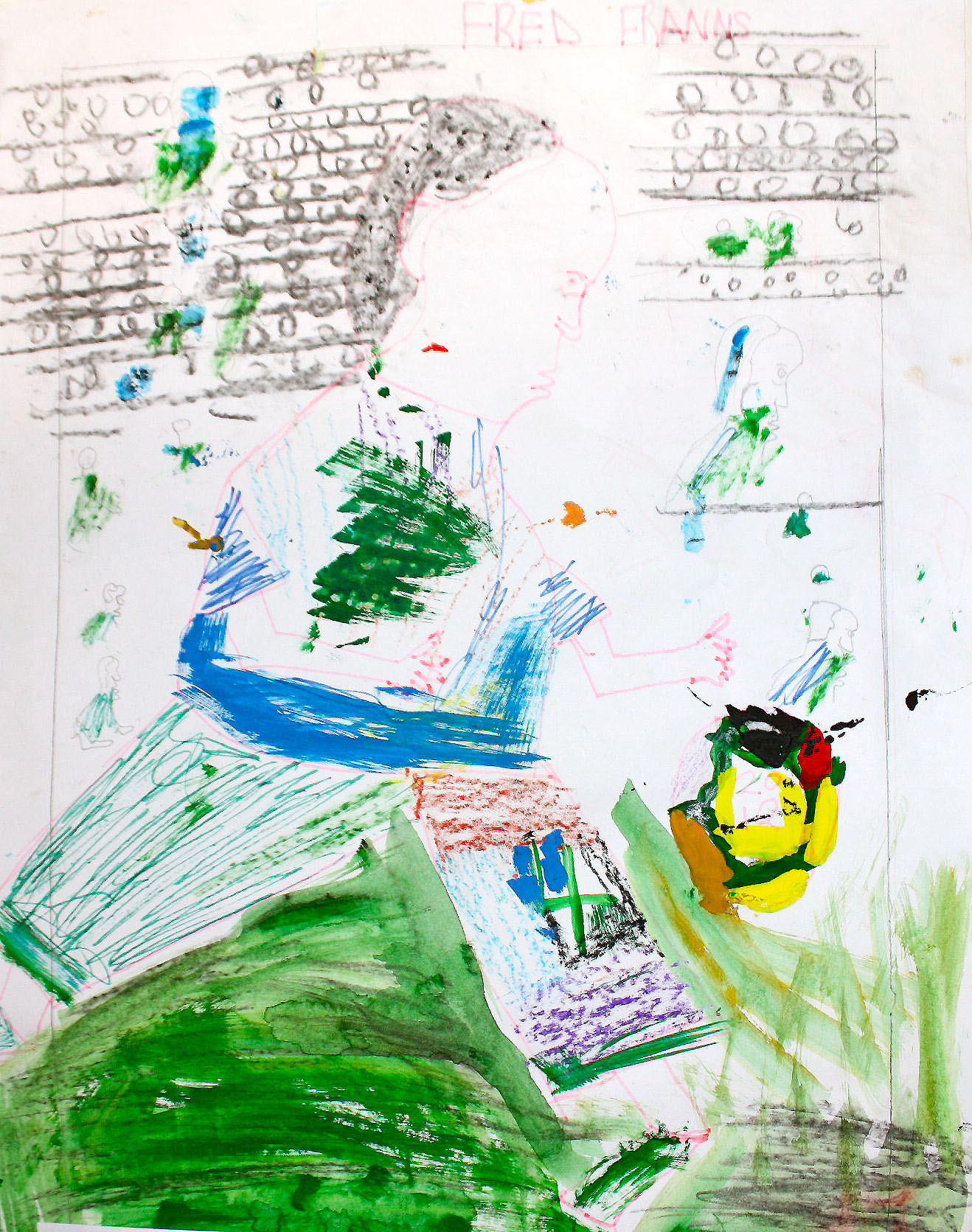
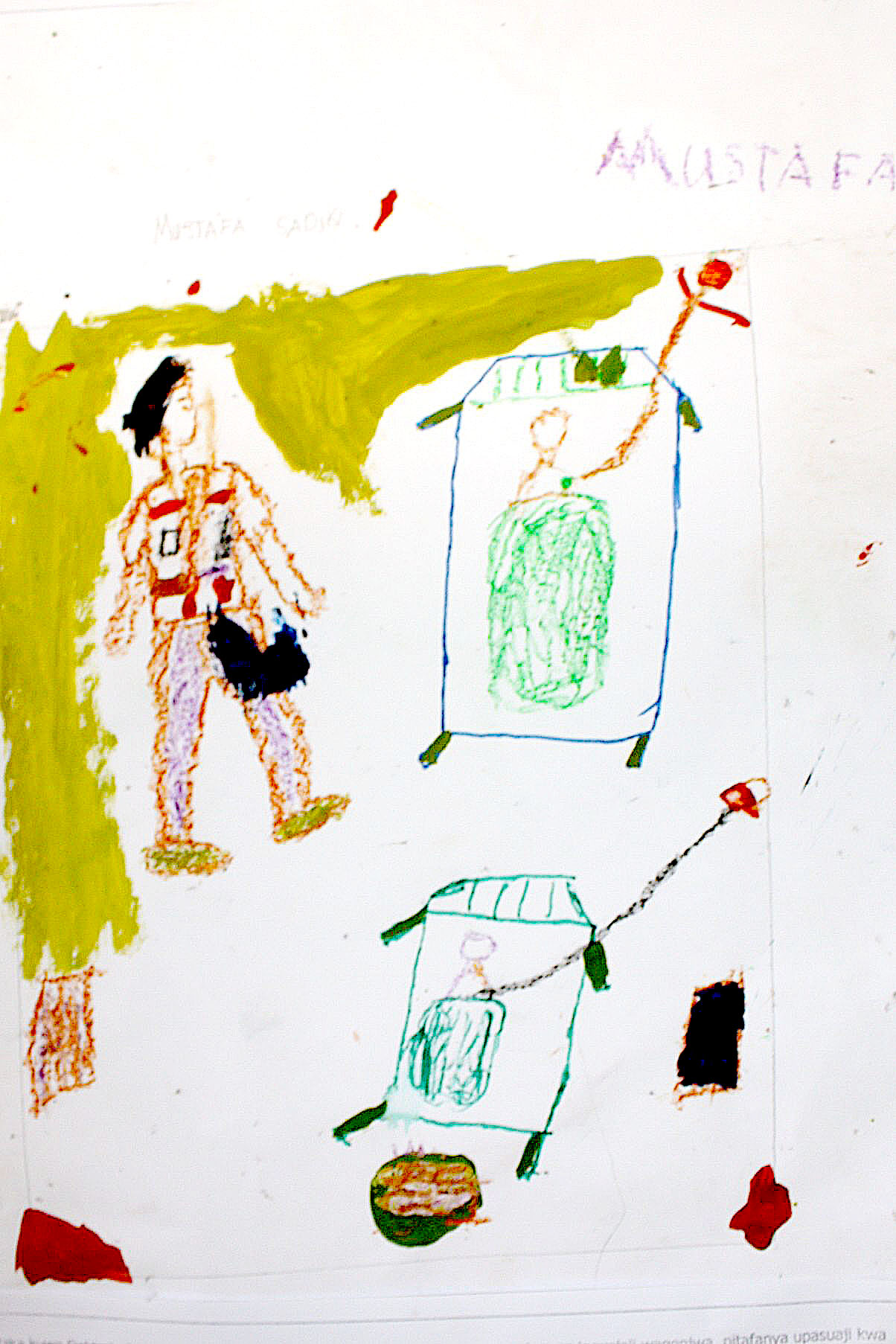
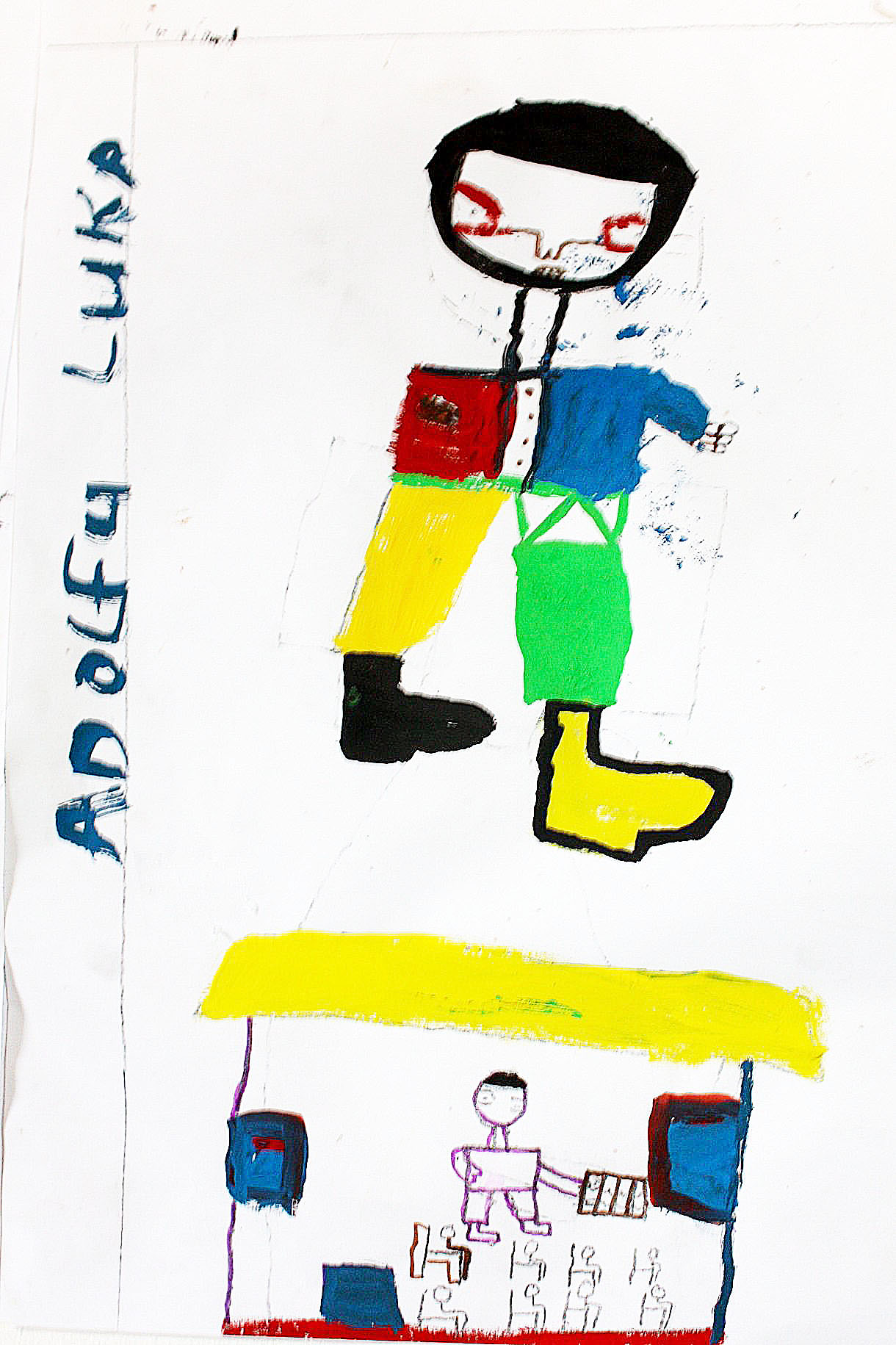
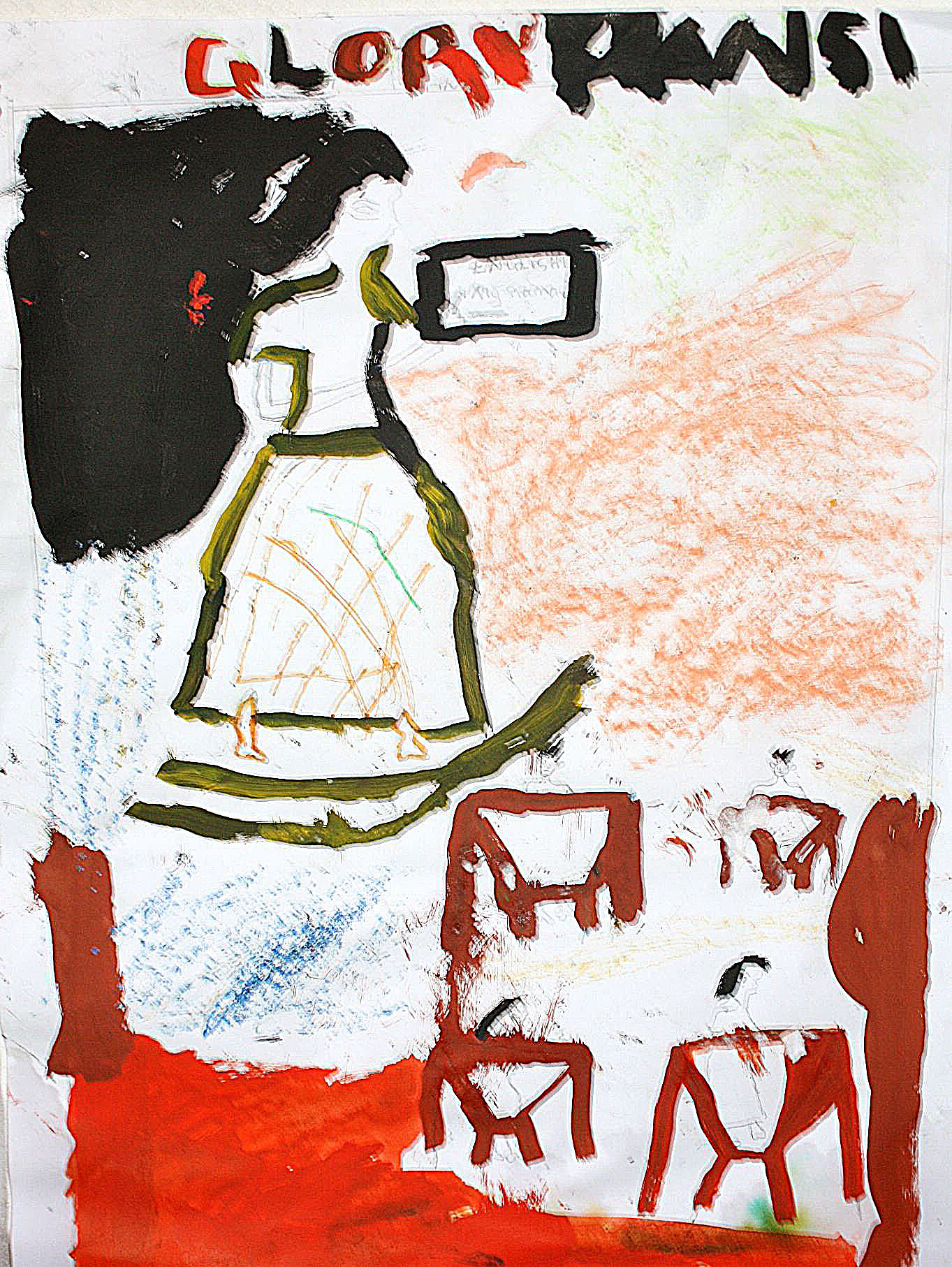
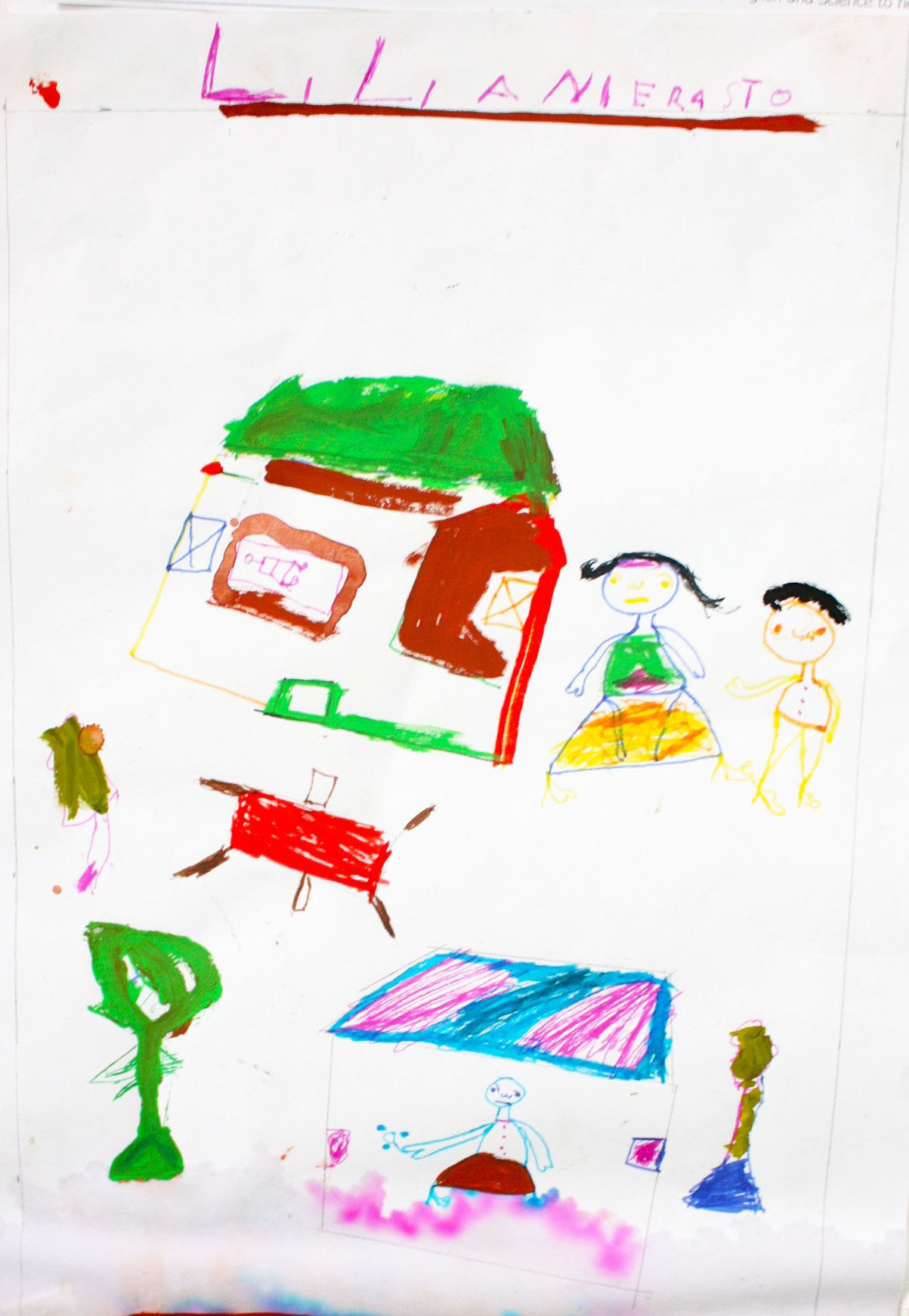
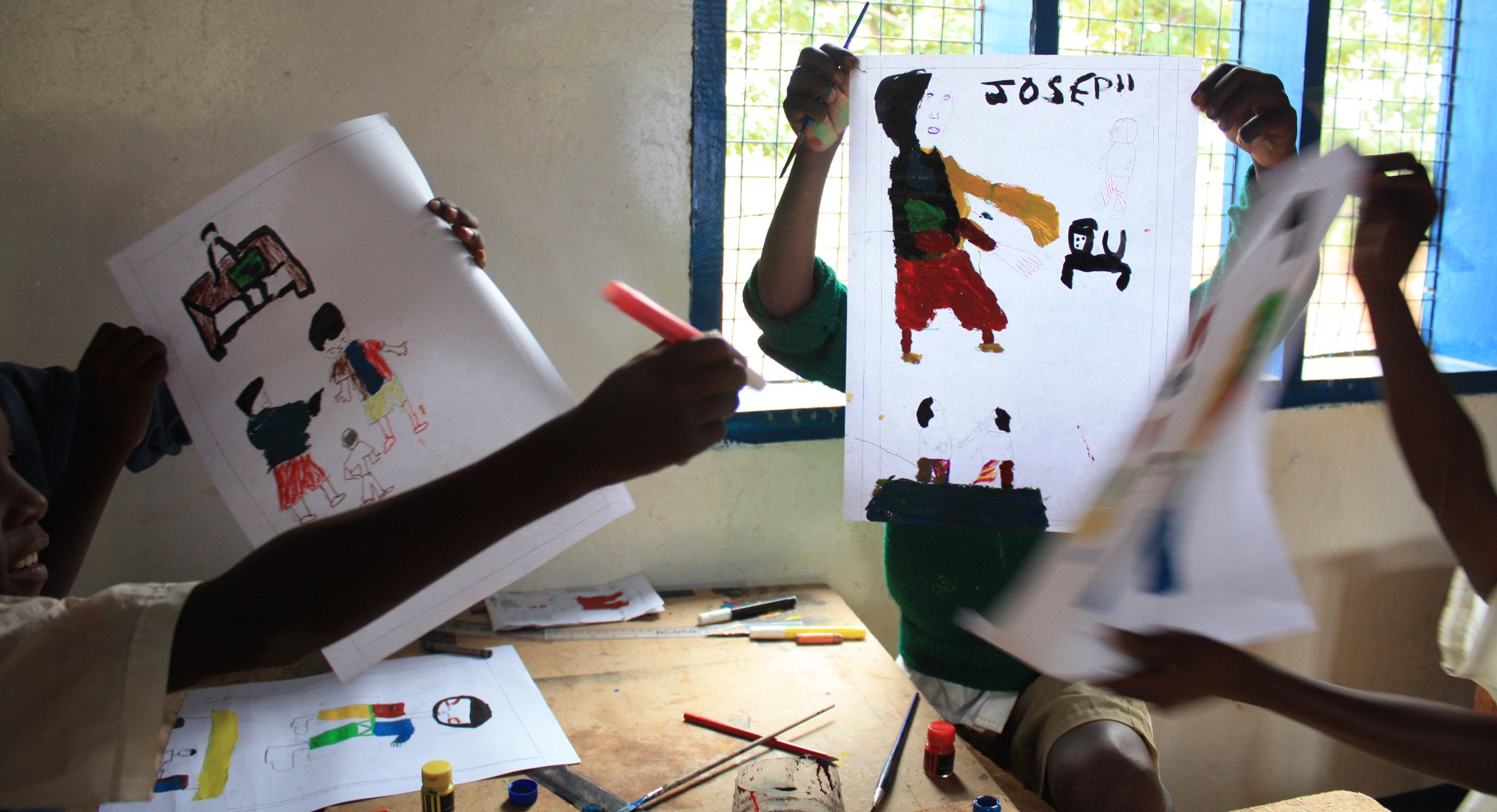
Whilst Singahini focussed on Child Rights and Kibo made collages about their community, Mgungani got busy making aspirational portraits with pencils, charcoal, paints and pens. At the same time the group thought about what role their education plays in their future and what their motivations are.  The portraits produced show a fantastic group of socially conscious and active community members. Between them they will fight corruption, improve health care, and educate and safeguard their communities. Take a look for some more inspiration!

Lilian, 11yrs: I want to be a house wife so I can take good care of my chidlren, parents and relatives.  I am studying all subjects to help me in the future.

Gloria, 9yrs: I want to become a nun so that I can teach other members in the community to pray and sing to the lord and all go to heaven. I also want to help others who want  to become nuns as well.

Kelvine, 10yrs:  I want to become a policeman so I can safeguard my community and to catch thieves who are disturbing people

Damasi 13yrs; I would like to become a teacher when I grow up after I completed my studies, for this reason I am studying hard at al subjects.  A teacher is the person who is respected all over the world, this is because all politicians, doctors and those with careers are learning through the hands of teachers.  I want to become a teacher to educate the world.  I also see that our community has very few teachers so therefore I would like to join in this career so I can help to educate my community as well.

Salimu 12yrs; I want to become a soldier when I grow up in order to protect my country Tanzania. I would like to help those who can not help themselves.

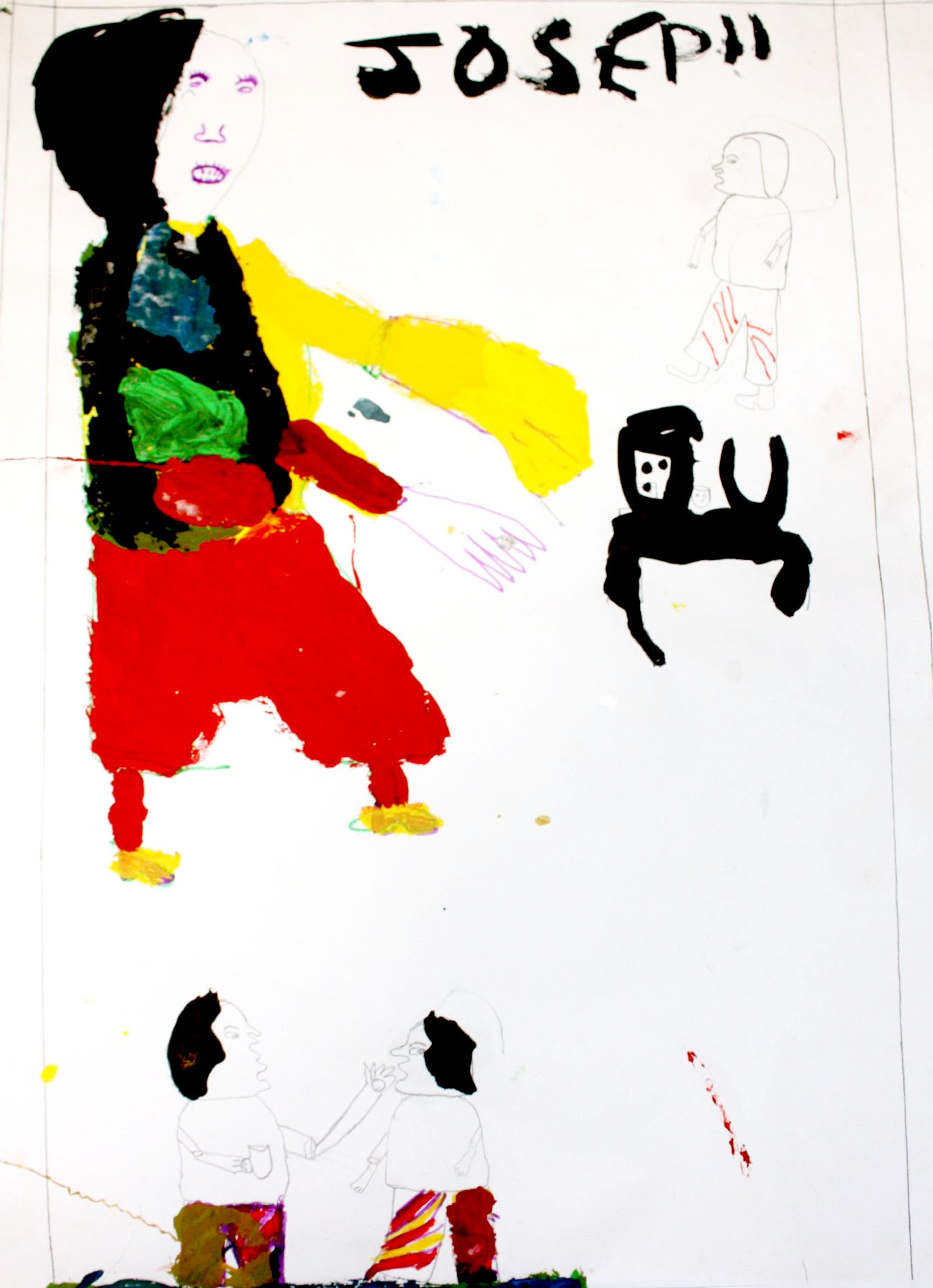
Joseph, 11yrs:  I want to be a doctor, this is because I will be able to cure sick people in my community,  and diseases like malaria.

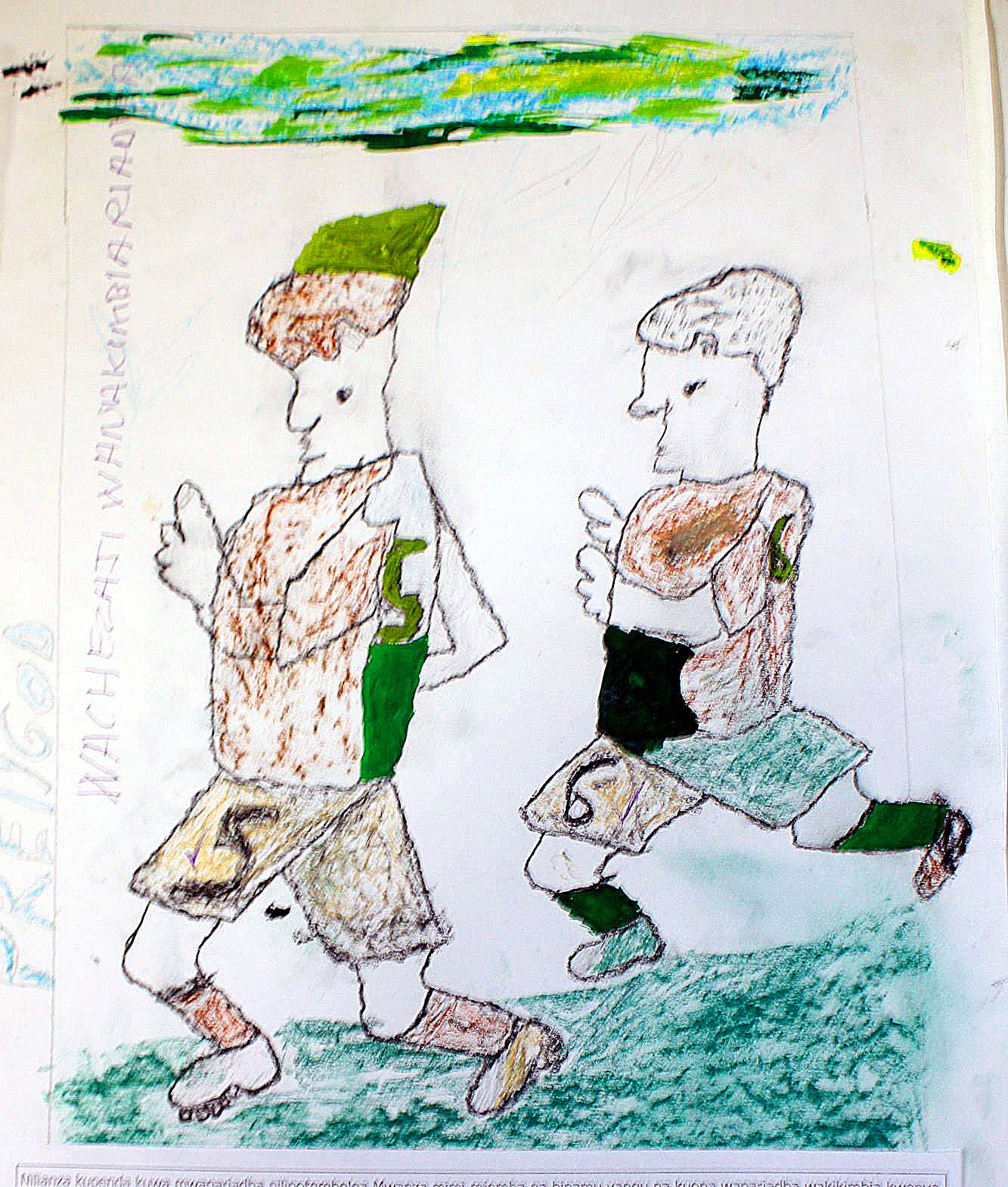
Preygodi, 11yrs: I started being interested in athletics when I visited Mwanza with my uncle and cousin and saw athletics people on TV.  I was so interested that I wanted to become one.  When I grow up I would love to be an athletics person.  I hope this will help me be healthy and strong.  I would also like to help my community participate in different kinds of sports for their healthy living.

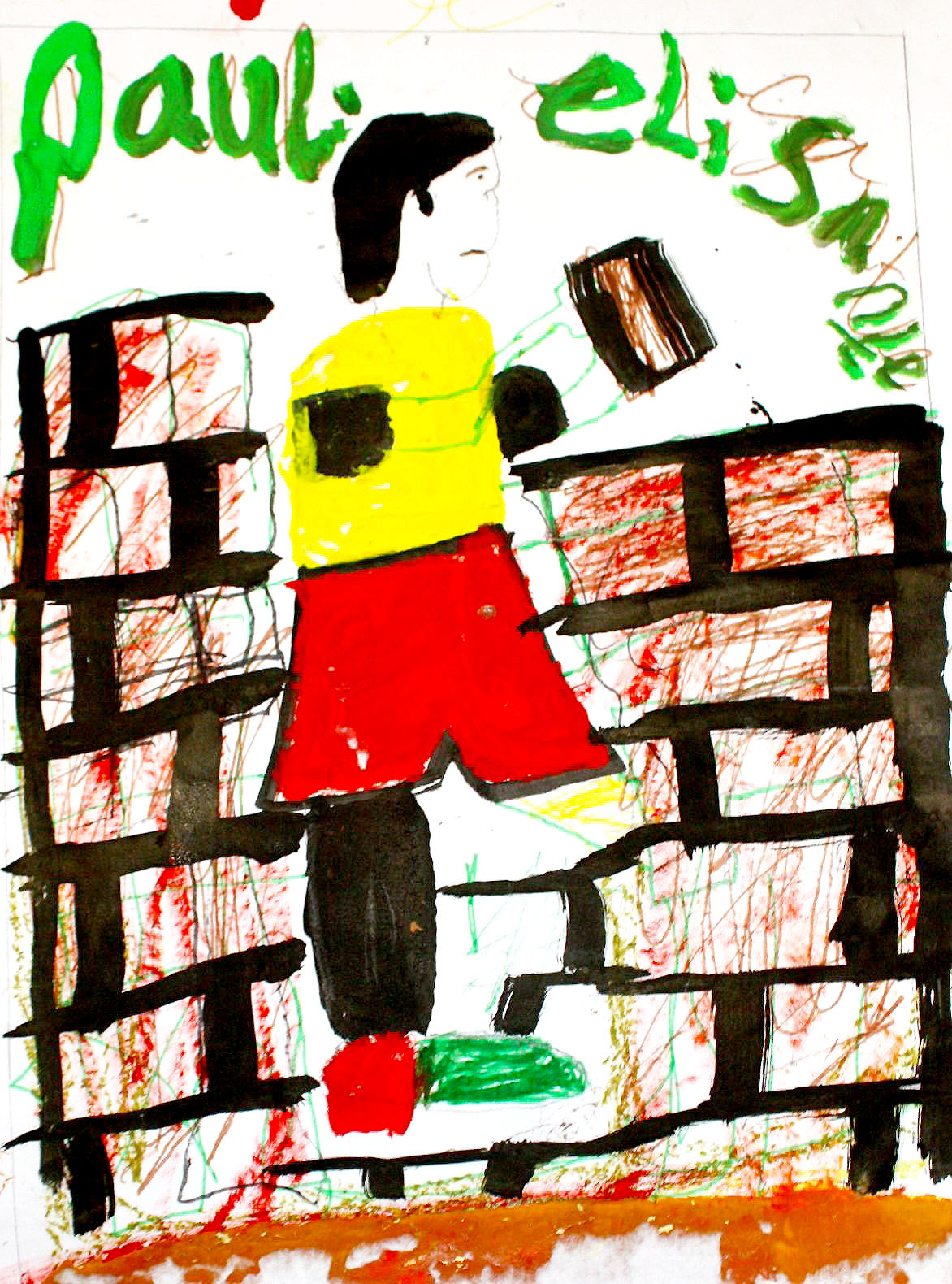
Pauli, 11yrs:  I want to be a constructor so that I can help my community to have quality houses and help those who don’t have any homes because they have little money.  I want to build houses for the rich people.  This would mean that  I would be paid in order to help my families needs like buying food for a balance diet so that hey can remain healthy and don’t become sick.

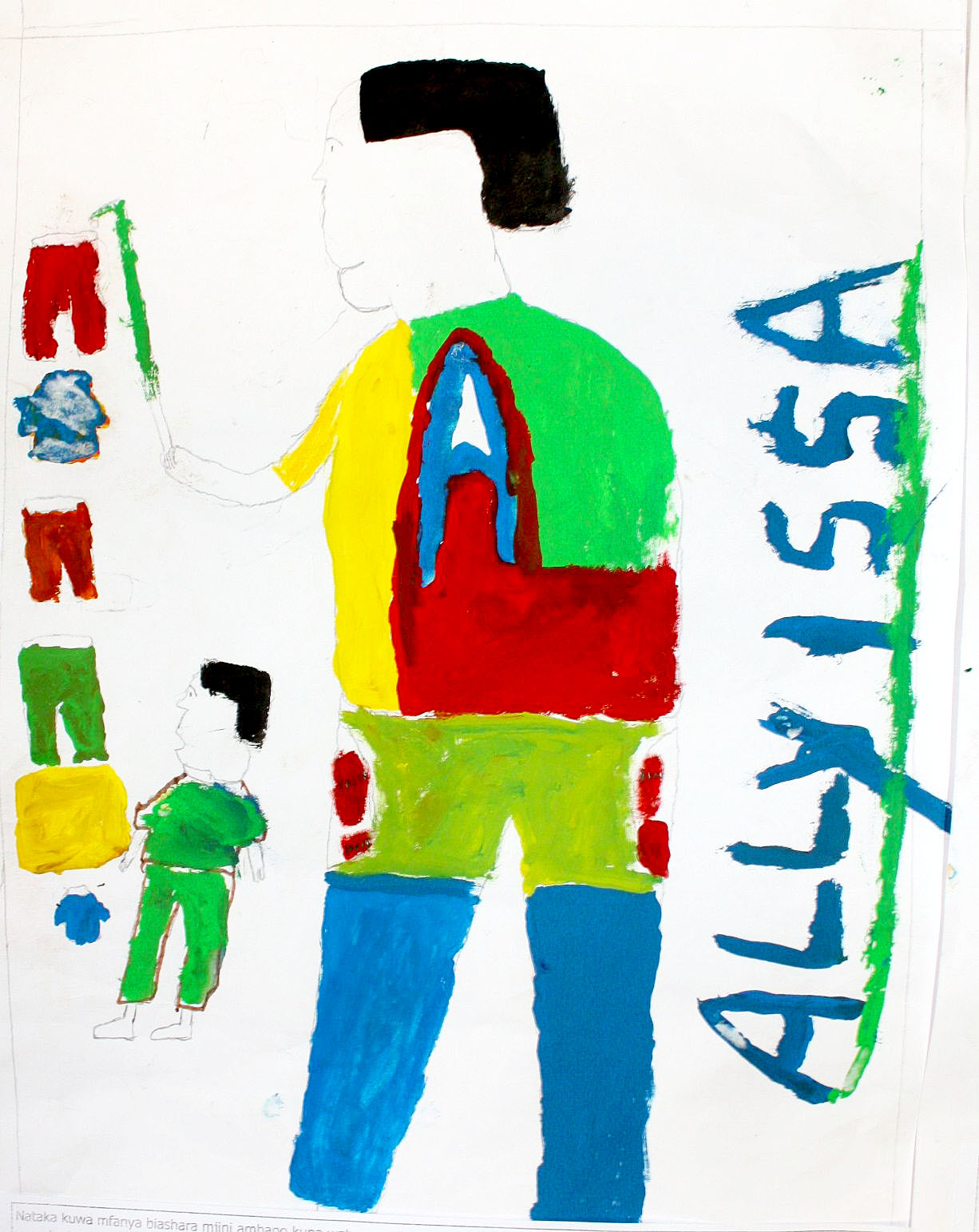
Ally, 11yrs: I want to be a business man in town where there are lots of people selling clothes in a big shop.  Not like those who are passing door to door selling clothes, I will be selling different types of clothes to people; I will employ a person to sell and I will be the supervisor.

Dismasi, 13yrs: I want to become a soldier because I want to protect my country from any kind of violence.  For example, when thieves want to steel  wires for electricity connections, I will catch them and send them to the police station.  I also want to help protect our countries boundaries and the farmers crops.  I am trying hard in Civics studies so I can become a good soldier.

Freddie, 11yrs: When I grow up I want to be  a football player.  I want to entertain Tanzanians and help those who are in need.  I study all of my subjects to make me knowledgeable

Mustafa, 10yrs: I want to become a doctor, this is because I will be able to give medicine to sick people and be kind to the sick people.  I also want to encourage health education in my community so that we can all care for sick people.  I will operate on sick people and give blood to those who need it.

Adolfu, 10yrs: I want to become a teacher because I have a good education, therefore I would like to share it with others in my community

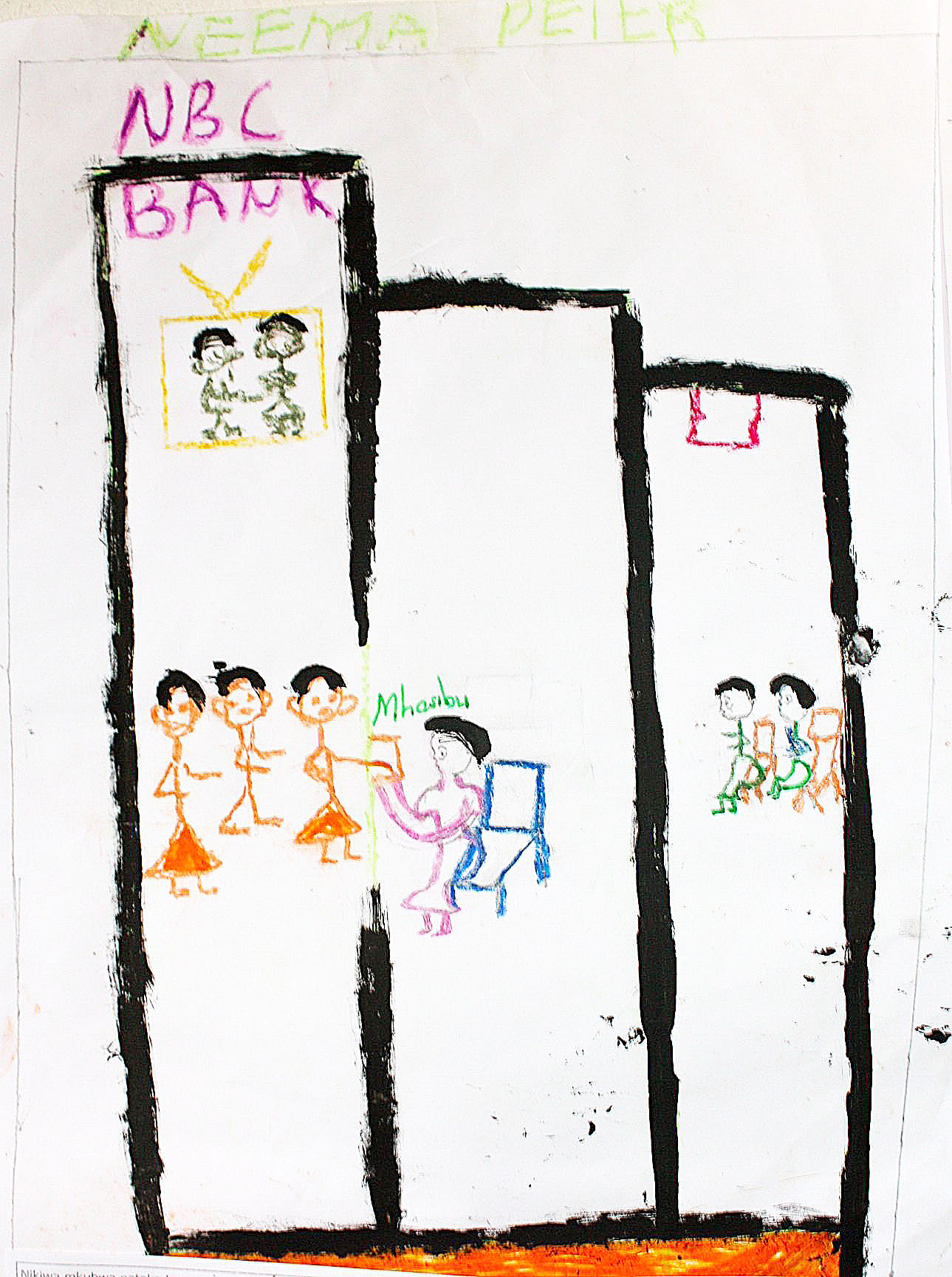
Neema, 12yrs: When I grow up I will like to be an accountant, this is because I will be able to keep money safe and account for it. This is to make sure that the money coming into a company is used correctly.

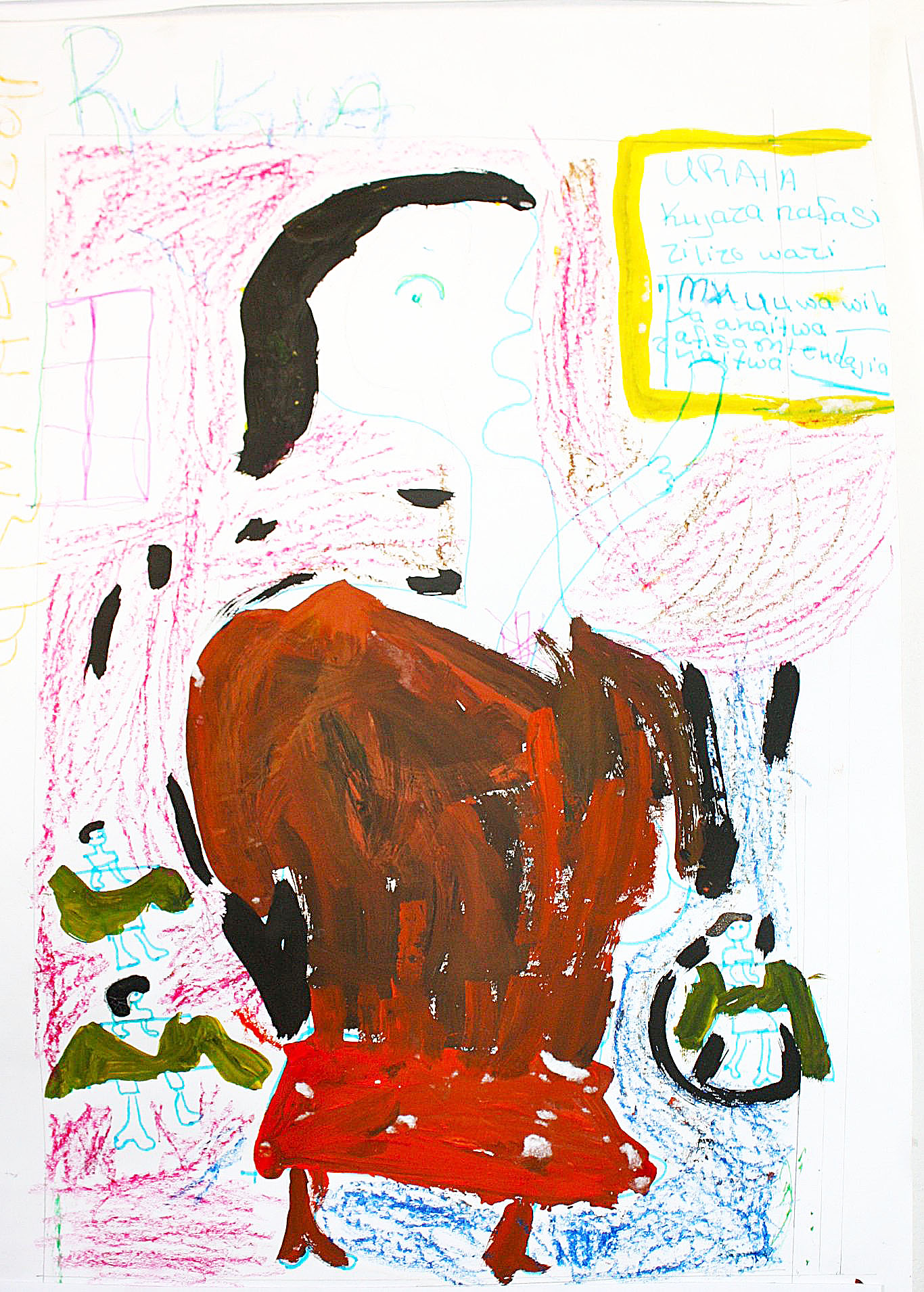
Rukia, 11yrs: I will be working as a teacher when I grow up so that I can teach primary school pupils to read and write.

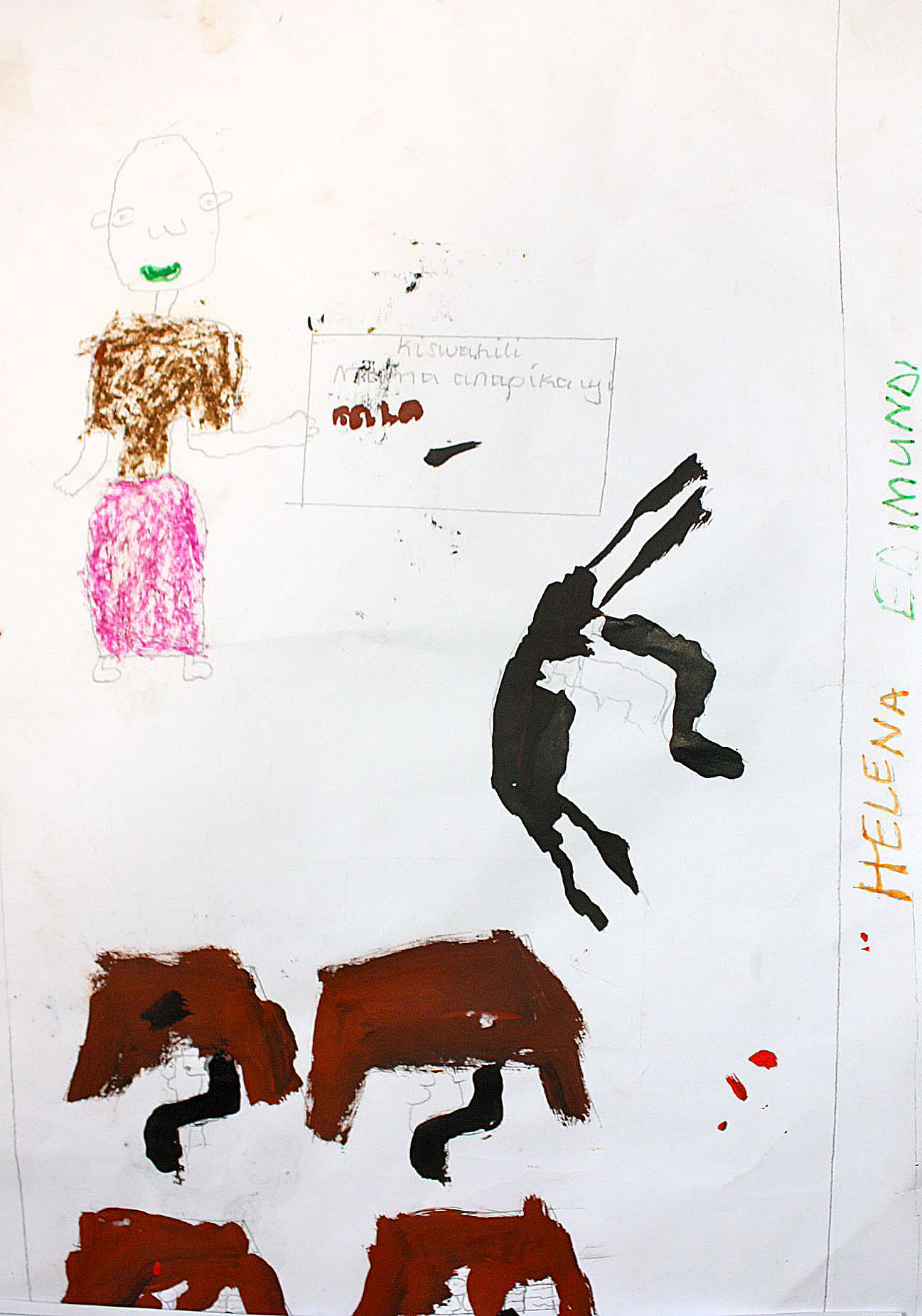
Helena, 10yrs: I want to become a teacher because this job will help give me an education and skills which will produce good fruits into others lives

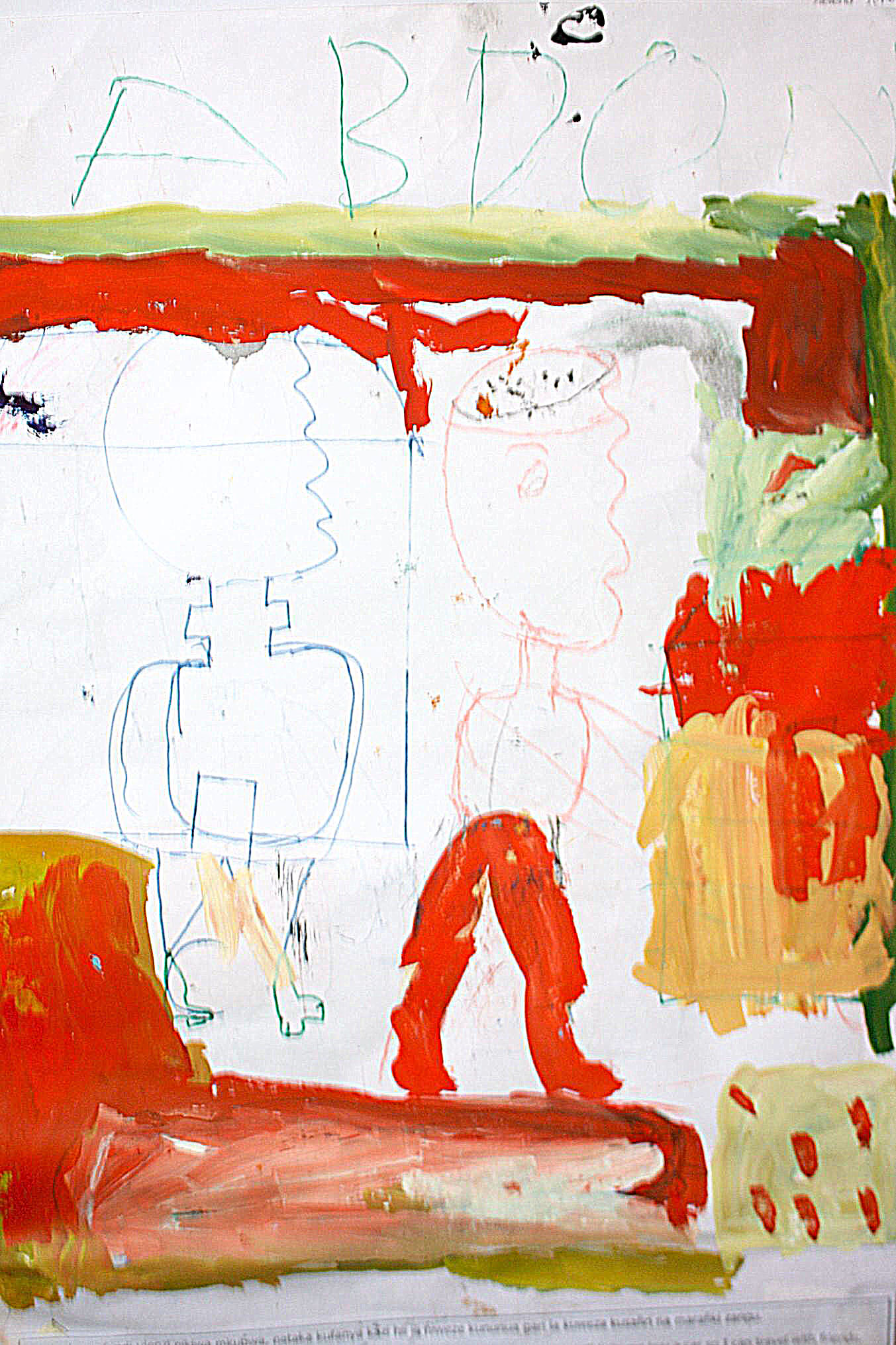
Abdoni, 10yrs; I want to be a constructor when I grow up. I want to do this job so that I can get money which will help me buy a car so I can travel with friends.

Glory Fransi, 10yrs: I want to become a teacher so I can give better education in my community.  This is important because the education they will get will hlpe them in the future.

Lilian, 11yrs: I want to be a house wife so I can take good care of my chidlren, parents and relatives.  I am studying all subjects to help me in the future

Leave a comment

Filed under Uncategorized

Article 4: Sharing the Protection of Rights

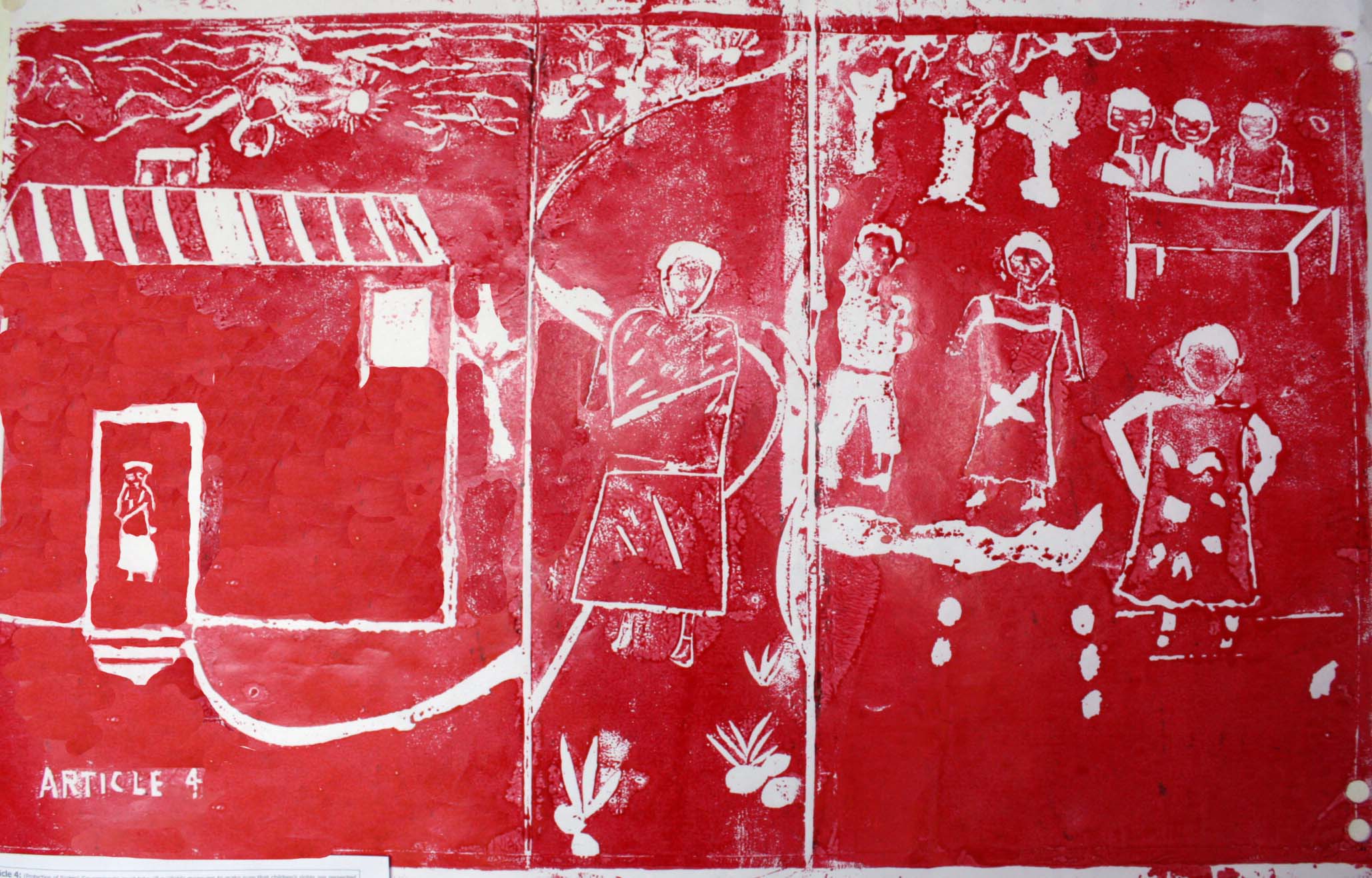
This group of girls produced a beautiful print for the exhibition about how communities can protect children’s rights. It shows a women who left her house one morning  to attend a meeting in the village about the UNCRC. She was late attending and on her way she met two young children already on their way home. They were able to answer of the women’s questions and therefore shared their communities responsibility  to implement their rights and help raise awareness of their importance. A really simple yet stunning print which shows clearly how communities and children can work together, this will look great in their class room!

Witness                             Victoria                                  Honorata                                Gertrudi

Article 4 (Protection of rights): Governments have a responsibility to take all available measures to make sure children’s rights are respected, protected and fulfilled. When countries ratify the Convention, they agree to review their laws relating to children. This involves assessing their social services, legal, health and educational systems, as well as levels of funding for these services. Governments are then obliged to take all necessary steps to ensure that the minimum standards set by the Convention in these areas are being met. They must help families protect children’s rights and create an environment where they can grow and reach their potential.

Heres what Witness, Honorata, Victoria and Gertrudi thought about how responsibility could be taken…

  1. To prepare meetings for participatory information sharing about rights. To share and learn together so that rights can be followed
  2. Governments to pass each house to make sure rights are followed and protection is there
  3. Governments to write letters to communities about rights to raise awareness
  4. Parents to go to child rights meetings
  5. Police to make sure that rights are followed by parents and children

Leave a comment

Filed under Arts Works, Communities, The Millenium Development Goals (MDG)

Article 19; Protection from Violence (featuring firewood and fruit)

Article 19 –

Children have the right to be protected from being hurt and mistreated, physically or mentally. Governments should ensure that children are properly cared for and protect them from violence, abuse and neglect by their parents, or anyone else who looks after them.

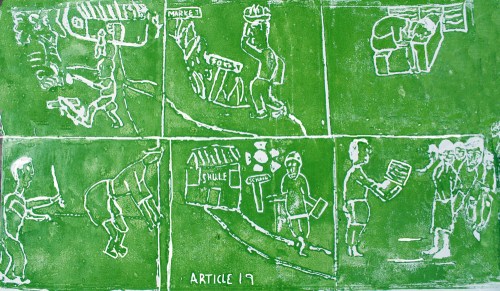
When Festo, Anold, Romani and Gilbert sat down to discuss what this particular child right means to them, they came up with more than just the physical and psychological effects of violence.  In their artwork they have chosen to draw attention to some of  the complex social reasons why children are faced with abusive situations, often out of their control. This illustration raises awareness on a very controversial topic in Tanzanian primary schools, the use of the cane.

In box 1 (top left)  it is early morning and the young boy is asked to chop firewood as part of his daily chores.  He then travels to the market to sell bananas and proudly contributes to the family income, 1 banana is usually sold for 100 shillings, that’s 4 pence. In the third picture after he finally arrives at school that day he grows very tired in the classroom and falls asleep at his desk.  As a result he is caned for laziness and this pattern continues until he fails the school year.  In their last picture (bottom right) the boy is then seen reading out his rights to his family and endeavors to explain that the reason why he is being continually punished in school is not due to ignorance or laziness but because he is not given enough time to rest. He is explaining to his family and community that education is a long term solution which will help break the poverty trap.

All groups based their stories on their initial Rights and Responsibilities Activity. Following are Festo, Anold, Gilbert and Romani’s key points about Article 19. It is interesting to note that their main association with violence is employment.

  1. Children have the right not to be hurt in any way
  2. Children shouldn’t be employed
  3. Children should be given time to study and rest
  4. Children shouldn’t be given any work which they aren’t physically or mentally capable of doing
  5. Our responsibility is to not run away from school.
Currently in Moshi, Childreach International are supporting another innovative project, Burning Innovation in which Ross Tierney from Kyoto Energy is training local fundis (mechanics/designers/engineers) to build energy efficient stoves which use less firewood and produces less smoke. Lets hope it spreads to the villages of Singachini as less firewood means more time for school,  and so on and so forth!

Leave a comment

Filed under Uncategorized