Article 19 –
Children have the right to be protected from being hurt and mistreated, physically or mentally. Governments should ensure that children are properly cared for and protect them from violence, abuse and neglect by their parents, or anyone else who looks after them.
When Festo, Anold, Romani and Gilbert sat down to discuss what this particular child right means to them, they came up with more than just the physical and psychological effects of violence. In their artwork they have chosen to draw attention to some of the complex social reasons why children are faced with abusive situations, often out of their control. This illustration raises awareness on a very controversial topic in Tanzanian primary schools, the use of the cane.
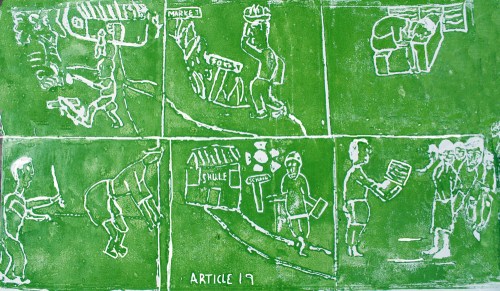
In box 1 (top left) it is early morning and the young boy is asked to chop firewood as part of his daily chores. He then travels to the market to sell bananas and proudly contributes to the family income, 1 banana is usually sold for 100 shillings, that’s 4 pence. In the third picture after he finally arrives at school that day he grows very tired in the classroom and falls asleep at his desk. As a result he is caned for laziness and this pattern continues until he fails the school year. In their last picture (bottom right) the boy is then seen reading out his rights to his family and endeavors to explain that the reason why he is being continually punished in school is not due to ignorance or laziness but because he is not given enough time to rest. He is explaining to his family and community that education is a long term solution which will help break the poverty trap.
All groups based their stories on their initial Rights and Responsibilities Activity. Following are Festo, Anold, Gilbert and Romani’s key points about Article 19. It is interesting to note that their main association with violence is employment.
- Children have the right not to be hurt in any way
- Children shouldn’t be employed
- Children should be given time to study and rest
- Children shouldn’t be given any work which they aren’t physically or mentally capable of doing
- Our responsibility is to not run away from school.

 makingartmakingmedotcom