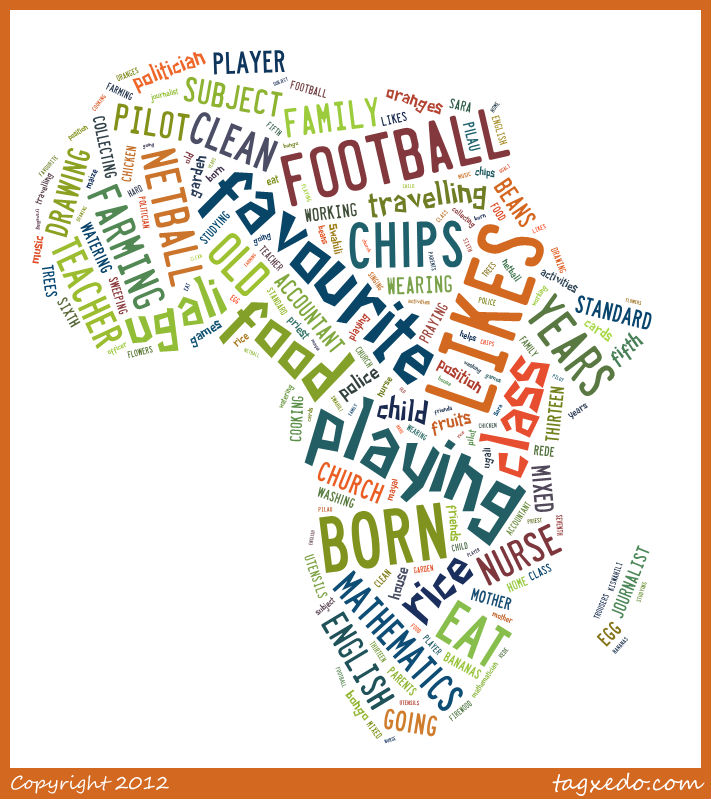
Kibo, what a difference a town makes!

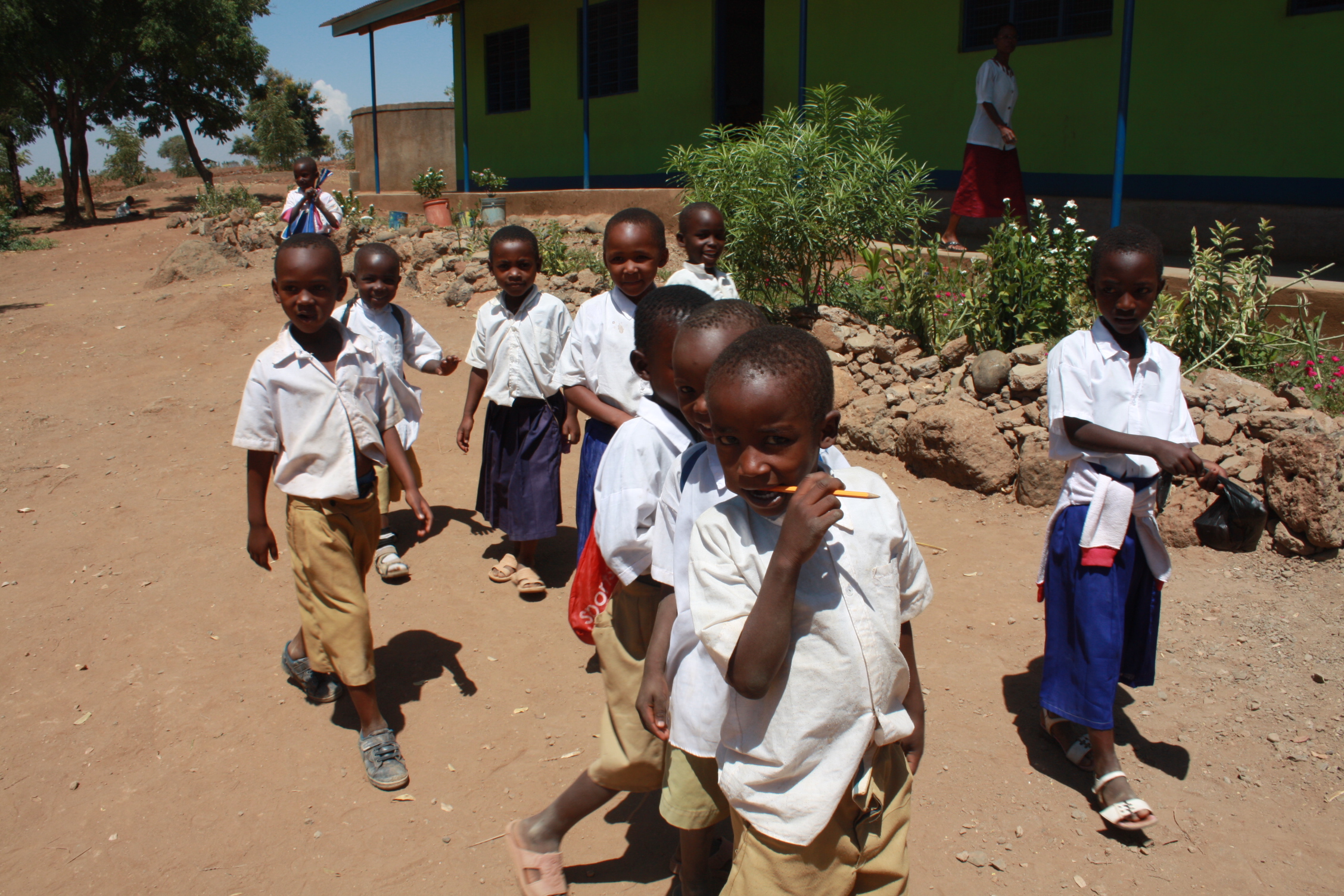
Kibo School is right in the middle of urban Moshi, and only a few minutes walk from Childreach International’s office. From the moment we stepped inside the school gates it was obvious that these children were much more self assured than the children we had met at Mgungani School which is in a more rural area, about a 40 minute drive out of Moshi.
The first workshop went really well, they took to the drama game and had no qualms with individually presenting to the whole group at the end of the workshop. This would have been a real challenge in the other two rural schools, at Singachini some children showed difficulties presenting to a small group of seven. Certainly, our visits last week to Mgungani and Singachini would of been the pupils first [o1] and possibly longest encounter with external classroom visitors, this got me thinking.
It makes sense that the children are more confident in towns as they are familiar with the hustle and bustle, the cars and tourists. I wanted to find out more about the discrepancies between urban and rural, perhaps living away from the crowds and noise of the city naturally fosters quieter and more introvert people? I interviewed Childreach International’s Programme Manager, Lorna Yoyo to find out more.
It seems that the daily activities of the children can vary very little between the towns and villages, chores are a huge part of childhood in Tanzania and many children will be at school at 6am to clean the classrooms before lessons start. It is also compulsory by law to bring five sticks of fire wood a day, imagine that. As well as chores, children will often take on family commitments from a young age, if there is a new born baby in the family girls as young as seven will begin caring for them after school whilst the mother tends to her errands.
The most noticeable difference between town and rural communities is electricity, there is none in the latter. With no light households can do little after dark and if you still have homework or chores to complete they are done using a flickering oil lamp or candle, the cause of many fatal fires in villages.
Our conversation then moved onto television sets and whilst I am in no way about to hail the TV as a powerful tool for a childs development, it was interesting to think that the television, amongst other media like music and film could play a crucial part in developing children’s cultural, social and global awareness. Along with observing the daily dynamics of commerce in the towns, these different media help cultivate a much broader cultural and social understanding, enabling children to contextually locate themselves within society. In Tanzania the owner of the television network IPP is a well respected entrepreneur from the Chagga tribe in Moshi. Reginald Mengi made his fortune selling pens and sweets and now heads up the largest industrial groups in East Africa. With his fortune Mengi sponsors many schools in Tanzania and every year he hosts a ‘take over day’ where he busses in a thousand disabled people from all over Tanzania and broadcasts an empowering television show with interviews, games and entertainment from this marginalised community. Far from the likes of the media tycoons in the UK!
TV is still a very minute part of a child’s life in Moshi, there is by no means the ‘TV dinner culture’ in urban Tanzania as seen in the global north and if children are fortunate enough to watch some it will only be after chores and homework are complete. However, being exposed to these electronic media, local businesses and commerce obviously plays a significant part in helping children become aware of the world around them and hence they are much more self assured. Electricity lights up an opportunity to learn after dark, catch snippets of the evening news, discover different cultures and even learn about complex family dynamic in soaps, some of which are broadcasted in English.
Another indicator is that our first workshop the drawings produced at Kibo were significantly larger than those at Mgungani and Singachini, we measured this by the area of paper used in each drawing. There is also a trend that the boys drawings are generally larger than the girls. It will be very interesting to see how these drawings and pupils develop over the coming months!
Filed under Cultural/ Social Difference, School Visits
Timed drawings at Mgungani

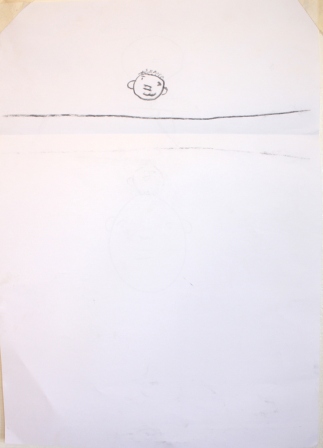
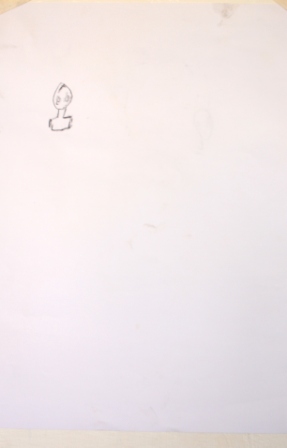
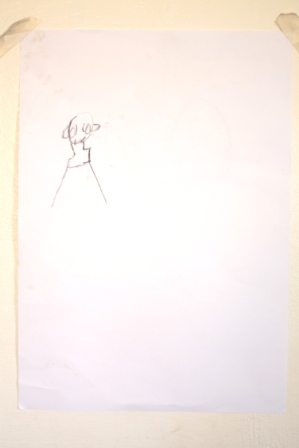
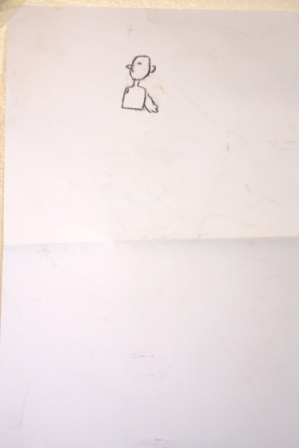
Each child was given a sheet of A3 paper, some charcoal and thirty seconds to draw their partner. These works will form part of my baseline survey and help indicate the children’s development as the project continues. It was very noticeable at Mgungani that the children produced very small drawings, taking several rounds of encouragement for them to increase in size and content. See here for an animation of how the drawings developed as the workshop continued. The ‘drawing game’ consisted of a few rounds of thirty seconds, one minute and one five minute drawing at the end.
Filed under Uncategorized
First Impressions: Mgungani
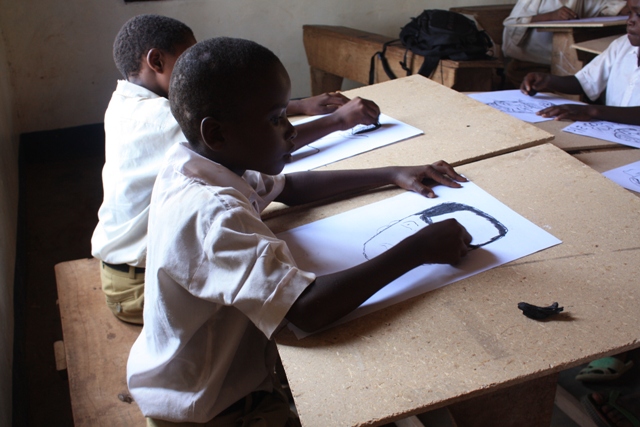
Yesterday MME kicked off with our first Kijitanbua (our personal identity) workshop in Mgungani primary school in semi rural Moshi. The session started with some very quiet introductions and a drama game to break the ice, Zip Zap Boing.
I could tell the children were a little reserved as they whispered their names whilst clenching their hands in the circle. Despite this, it didn’t take long for smiles to shine and the zips, zaps around the circle encouraged the teachers to join in too!
We continued this format for the rest of the workshop by playing a ‘drawing game’ which enticed the children from level 4,5 and 6 (9ys-13yrs) to draw as quickly and expressively as possible. If in thirty seconds you hadn’t completed a charcoal drawing of your partner sitting opposite, you were out! After each round the drawings got a little bigger and bolder and by the end of the workshop each child produced a fantastic 5 min picture of their rafiki. And no for all you Disney fans, I do not mean the baboon from The Lion King, in Swahili rafiki means friend!
One of our goals and main challenges we will be facing throughout MME is the reticence of the children. This, coupled with the lack of creative learning strategies in Tanzanian classrooms means we have our work cut out for our ‘60 children to demonstrate increased confidence, self esteem and ability to express themselves through art’. In order for the project to be sustainable we are also working on involving the teachers in the classes, at the beginning of the session questions were answered on behalf of the children and we want them to think for themselves!
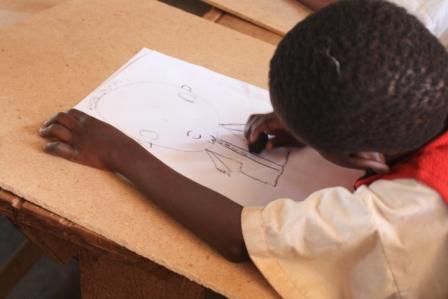
Today, Making Art, Making Me will begin in Kibo school, we will be applying our lessons learnt from yesterday and can’t wait to see how the children from urban Moshi respond to their first workshop!
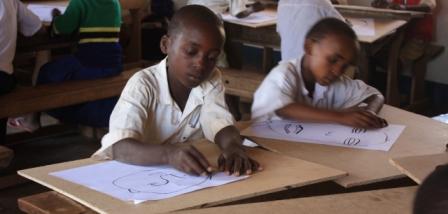
Children sit opposite each other and draw thier partners
Filed under School Visits, Uncategorized
Ever wondered what a Tanzanian art lesson looks like?
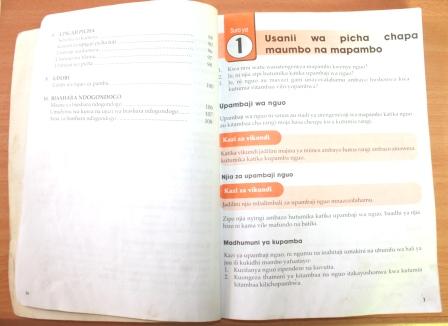
This is P.1 of the curriculum for Arts, Crafts and Social Studies (Stadi za Kazi) It offers a really interesting insight into how the creative curriculum is delivered here in Tanzanian primary schools.
The art of drawings, shapes and decorations
Questions
- Why do people make decorations on clothes?
- How do theyd decorate them?
- Which type of clothes do you know which are decorated by using different fabrics?
Decorations of Clothes: decorating clothes is artistic and you can decorate them with different patterns.
Group work: in your groups discuss the names of the plants which can be used to produce colours and paint with
Ways of decorating clothes
Group work: Discuss different ways of decorating clothes that you know
There are ways which are used to decorate clothes some of these are Batik.
Why do we decorate? – to decorate clothes you need to be creative.
- To make clothes look attractive
- To add value to the cloth and the fabric
- Using colour and patterns to meet the needs of certain events. For example, independence day, or the union day between Tanzania and Zanzibar.
Filed under Uncategorized
Tengeneza Sanaa, Kujijgenga
 After successfully translating Making Art, Making Me into Swahili – Tengeneza Sanaa, Kujijgenga (meaning to grow and develop as persons through creativity) we met with the head teachers and some of the pupils from Mgungani, Singachini and Kibo primary schools. They all loved our proposal and we are delighted to announce that we will be working with 60 of their students over the next two months!
The semi rural Mgungani primary school currently dont have a teacher to deliver their Arts and Crafts lessons so we will be involving their teachers in our Tuesday afternoon workshops, they wanted us to start right away!
More good news is that Kibo school in urban Moshi have kindly offered to host our exhibition in March, they have already started talking about inviting government officials and local education officers. From what we gather from Mrs Sunguya, MME is in line with the government ambition for teachers to help children creatively find their own voices, moving away from a taught or ‘forced’ opinion and to develop and express their own.
In section 4.1 of the Tanzanian Development Vision 2025 creativity is recognised as strategic change agent.
Education should be treated as a strategic agent for mindset transformation and for the creation of a well educated nation, sufficiently equipped with the knowledge needed to competently and competitively solve the development challenges which face the nation. In this light, the education system should be restructured and transformed qualitatively with a focus on promoting creativity and problem solving.
It looks like we are on the right track!
Filed under School Visits, Tanzanian Developent Vision 2025
Off to Tanzania

Making Art, Making Me, the latest creative education project from ChildReach International, is launching in Tanzania this weekend.
On this blog you will be able to follow us through our weekly creative workshops in schools around Kilimanjaro. We will be exploring ‘identity’ through personal, local and global perspectives in a wide range of exciting art forms.
Watch this space as the children creatively develop their ideas and opinions about themselves, their communities and the world through the arts.
You name it, we will MAKE it!
Why not follow us on Twitter for regular updates!
Filed under Uncategorized

 makingartmakingmedotcom